Summary
- Explores how teaching everyday toddler life skills through joyful classroom routines transforms ordinary moments into confidence-building milestones.
- Explains why young children naturally crave purposeful responsibility—such as pouring water, tidying toys, and putting on their own shoes—and how those habits strengthen motor coordination and executive function.
- Highlights how Montessori-inspired practical activities and collaborative helper roles nurture empathy, patience, and genuine classroom community.
- Connects early self-care habits directly to smooth preschool and kindergarten transitions across Langley and the Fraser Valley.
- Shares simple, practical ways parents can invite their little ones to be proud helpers at home without rushing busy weekday routines.
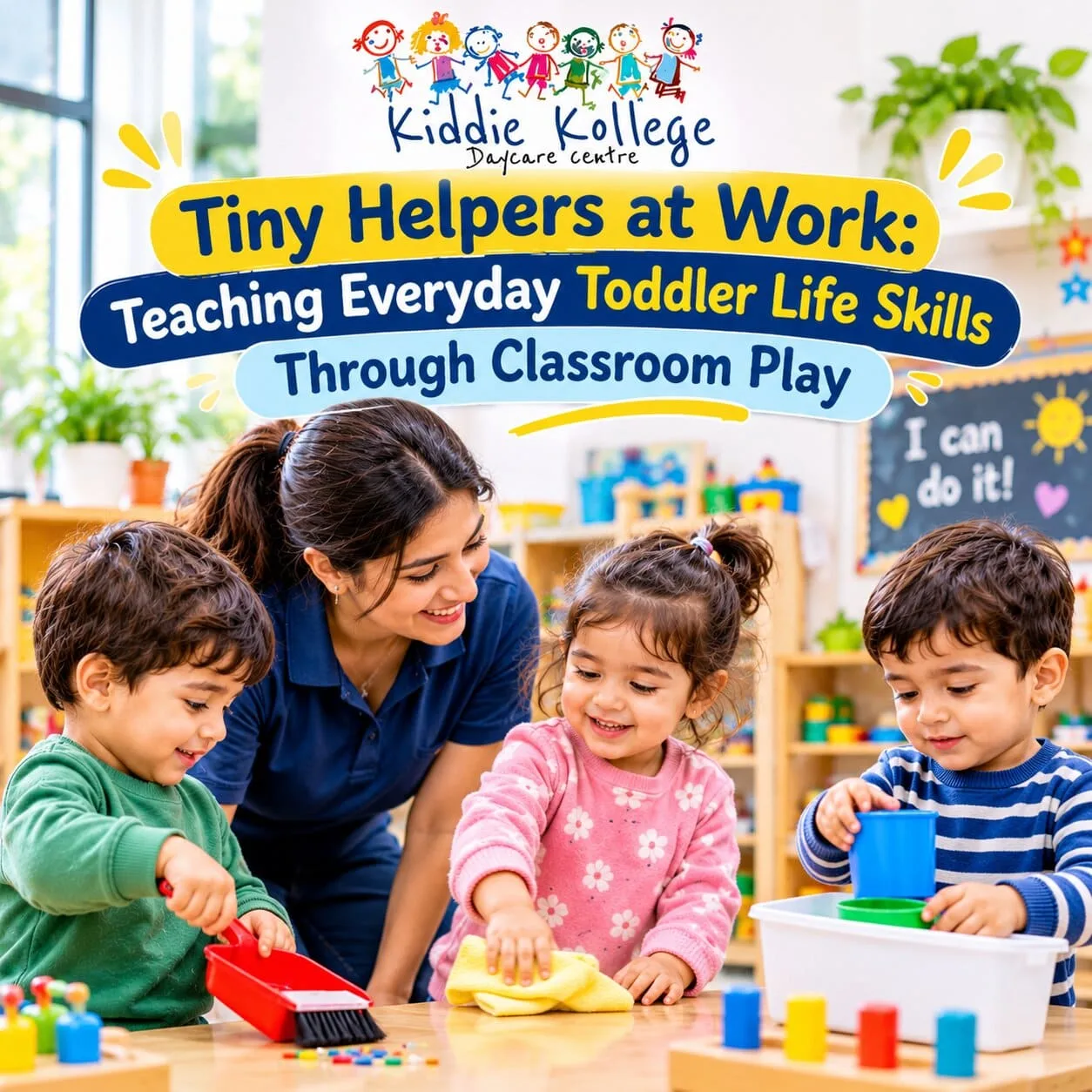
Watch a two-year-old concentrate deeply while carrying a small sponge to wipe up a splash of water, or beam with pride after successfully zipping up their own rain jacket, and you are witnessing one of the most rewarding stages of early childhood. Between eighteen months and three years of age, young children move rapidly from wanting everything done for them to insisting, “I do it myself!” Incorporating everyday toddler life skills into daily classroom routines honours that natural drive for autonomy, turning ordinary tasks like snack preparation, handwashing, and tidying blocks into purposeful, confidence-boosting play.
At Kiddie Kollege, located at 20103 53 Ave, Langley, BC V3A 3T8, Canada, our educators lead a warm multi-age childcare program where toddlers are treated as capable community contributors, building practical independence and self-assurance alongside supportive peers and caring mentors.
Understanding how early learning classrooms turn simple daily routines into meaningful skill-building helps parents see why a child’s proudest moments often happen away from the art easel or puzzle table. When little hands are trusted with real, appropriately sized tools and unhurried guidance, children develop a quiet inner confidence that carries into every future classroom they enter.
Why Toddlers Love Being “Tiny Helpers”
To an adult, wiping a table, sorting spoons, or putting boots neatly against the wall looks like a chore. To a toddler, those exact same actions feel like fascinating, grown-up magic. Between ages one and three, children are driven by an innate developmental urge to imitate the capable adults around them and master their physical environment.
Developing self-help skills for toddlers satisfies three deep developmental needs at once:
- A Sense of Agency and Belonging: When toddlers contribute to caring for their shared classroom—whether watering a windowsill plant or passing out napkins before snack—they feel valued as important members of the group rather than passive observers.
- Refined Motor Coordination: Pouring water from a small pitcher, peeling a clementine, or clipping clothespins onto a drying line strengthens the exact hand-eye coordination, wrist stability, and pincer grip required later for holding pencils and using scissors.
- Cognitive Sequencing and Focus: Everyday tasks follow a clear beginning, middle, and end. Remembering to wet hands, rub with soap, rinse, and dry with a towel builds working memory, focus, and sequential thinking far more naturally than flashcard drills ever could.
Designing Classrooms That Invite Toddler Independence
A toddler cannot practise independence in a room built entirely for adult convenience. Encouraging toddler independence in daycare begins with thoughtfully preparing the physical environment so young learners can reach what they need safely and successfully without constant adult rescue.
In child-centred classrooms, furniture and materials are scaled down to toddler height:
- Accessible Cubbies and Coat Hooks: Low wooden hooks placed at shoulder height allow toddlers to hang up their own backpacks and jackets each morning, building pride from the very first minute of drop-off.
- Open, Low Shelving: Toys, wooden puzzles, and art trays are displayed neatly on open shelves with clear visual labels rather than buried inside deep toy chests. When children can see where a basket belongs, putting it away becomes a satisfying matching game.
- Child-Sized Care Tools: Small brooms, lightweight dustpans, mini watering cans, and woven washcloths fit comfortably in toddler hands, turning spill cleanup into an exciting gross-motor activity rather than an accident to feel embarrassed about.
- Sturdy Step Stools: Wide, non-slip step stools at sinks allow toddlers to reach running water and soap dispensers safely on their own, fostering consistent hygiene habits.
Practical Life Activities Woven into Play
In progressive early learning settings, practical skill-building never feels rigid or joyless. Instead, educators weave montessori practical life activities seamlessly into play based learning centres so children explore real-world tasks at their own curious pace.
During morning free-choice discovery, toddlers gravitate toward sensory and practical trays that build everyday dexterity:
- Pouring and Transferring Stations: Using small ceramic or stainless-steel pitchers to pour dry beans, rice, or water between cups teaches steady hand control, spatial awareness, and how to calmly clean up small spills with a sponge.
- Dressing Frames and Fastener Play: Wooden frames fitted with large buttons, Velcro straps, snaps, and chunky zippers let toddlers practise dressing mechanics calmly during playtime—eliminating the frustration of learning while rushing out the door for outdoor play.
- Food Preparation Helpers: Toddlers love using safe, blunt-edged butter knives or wavy crinkle cutters to slice soft bananas, spread hummus on crackers, or stir muffin batter during group baking projects. Children who help prepare healthy snacks are also far more eager to taste new foods at the table.
- Plant and Classroom Care: Mist-spraying leafy classroom ferns with a small spray bottle or dusting wooden shelves with a soft lamb’s wool duster builds gentle touch, patience, and environmental stewardship.
Learning Through Rhythm: How Daily Routines Reinforce Autonomy
Consistency is the secret ingredient that turns occasional practice into lasting habit. A predictable daycare schedule gives toddlers dozens of low-pressure opportunities each day to practise self-care alongside friends who are working on the exact same milestones.
Consider how much practical learning unfolds during a typical morning and afternoon rhythm:
- Morning Arrival: Saying goodbye at the door, placing lunch bags in designated bins, and swapping outdoor rain boots for indoor shoes sets a calm, capable tone for the day.
- Snack and Lunch Transitions: Children wash their hands, carry their own plates or lunchboxes to the table, open containers with gentle encouragement, drink from open cups, and scrape leftovers into the compost bin when finished.
- Outdoor Gear Mastery: Before heading out into the fresh Fraser Valley air, toddlers practise the famous “coat flip”—laying their jacket on the floor with the hood by their toes, sliding their arms in, and flipping it overhead to cheers from classmates.
- Tidy-Up Songs: Rather than abrupt commands to clean up, cheerful tidy-up songs cue children to work side by side returning blocks, books, and dramatic play props to their rightful homes.
Over weeks and months, these small daily victories compound. A toddler who initially waited passively for an educator to put on their socks soon beams with triumph while pulling them up independently.
How Multi-Age Peer Groups Spark Natural Imitation
Children learn remarkably fast when they watch someone just a little bit older than themselves succeed. In a mixed-age early childhood classroom, peer modelling becomes one of the strongest engines for practical skill growth.
When an eighteen-month-old watches a three-year-old classmate carry a water pitcher steadily or zip up a vest, the younger child immediately wants to try too. Meanwhile, older toddlers and preschoolers feel a wonderful boost in self-esteem when invited to demonstrate how to snap a buckle or show a newer friend where the hand towels live. Pairing peer inspiration with a thoughtful preschool curriculum ensures every child is challenged gently without feeling pressured or compared.
From Toddler Helpers to Kindergarten-Ready Learners
Parents often wonder what truly matters most when preparing young children for elementary school. While recognizing letters and counting objects are exciting milestones, kindergarten teachers across British Columbia consistently emphasize that practical self-management and emotional resilience make the biggest difference during the first months of school.
Mastering everyday helper routines builds vital preschool readiness skills long before age five:
- Managing Personal Belongings: Knowing how to pack a backpack, open lunch containers, and keep track of mittens prevents overwhelm in bustling kindergarten classrooms.
- Following Multi-Step Directions: Carrying out two- and three-step classroom routines—such as tidying an activity, washing hands, and sitting on the story rug—prepares children for structured school transitions.
- Frustration Tolerance and Perseverance: Learning that it takes three or four tries to button a sweater or pour water without spilling teaches toddlers that mistakes are simply part of learning, building grit and problem-solving confidence.
Bringing Classroom Helper Habits Home Without Stress
Encouraging independence at home does not mean turning hectic weekday mornings into a battle of wills. Choosing calm, unhurried moments—like Saturday mornings or evening bath time—allows parents to nurture autonomy joyfully:
- Build in a Five-Minute Buffer: When heading out the door, give your toddler five extra minutes to try putting on their own shoes or jacket before offering a helping hand.
- Break Tasks into Tiny Steps: Instead of saying “Clean your room,” try “Let’s put all the wooden blocks into the blue basket together.” Specific, bite-sized invitations prevent overwhelm.
- Offer Real Participation in Family Chores: Invite your toddler to tear lettuce leaves for dinner salad, match clean socks from the laundry basket, or wipe the lower kitchen cabinets with a damp cloth.
- Celebrate Effort Over Perfection: If your toddler puts their shoes on the wrong feet or leaves a few crumbs on the placemat, praise their enthusiastic effort first before gently modelling how to adjust it.
Choosing Supportive Early Care in Langley, BC
Finding an early learning setting where patience, practical skill-building, and joyful play come together gives families lasting peace of mind. Across the Fraser Valley, parents exploring play-based daycare langley programs look closely at whether educators take the time to let children try things for themselves rather than rushing through routines.
Families seeking trustworthy childcare langley options value environments where safety, warmth, and developmental expertise go hand in hand. Enrolling in licensed childcare langley bc ensures that classrooms meet strict Fraser Health standards for child-to-educator ratios, hygiene, and safe, child-accessible equipment. Whether parents are comparing local centres in Willoughby, Murrayville, and Walnut Grove, searching online for a caring licensed infant daycare near me as parental leave concludes, or looking for an inspiring pre school near me near 53rd Avenue where toddlers can grow into confident, capable helpers, choosing a centre that respects each child’s emerging independence sets the stage for years of happy learning.
Frequently Asked Questions
At what age do toddlers start learning practical self-help skills in daycare?
Toddlers begin exploring simple self-help actions around 15 to 18 months—such as holding an open cup with two hands, washing hands with support, and dropping toys into a basket. Between ages two and three, children rapidly expand into putting on shoes, using utensils independently, pouring water, and helping tidy shared classroom spaces.
How do educators balance teaching independence with keeping daily routines on schedule?
Experienced educators build extra transition minutes directly into the daily rhythm and set up child-accessible cubbies, sinks, and snack stations. Rather than rushing, teachers break tasks into simple steps—letting toddlers handle the parts they can master while offering calm, respectful assistance with tricky zippers or snaps.
What is the typical response time when inquiring about space availability or booking a tour?
Our administrative team understands that parents coordinating return-to-work dates and family schedules appreciate prompt, clear communication. Inquiries submitted online or by phone are typically answered within 24 to 48 business hours with current program availability and tour options.
Which neighbourhoods around Langley does the 53rd Avenue centre serve?
Centrally situated on 53rd Avenue, the centre provides convenient access for families living and commuting across Langley City, Murrayville, Willoughby, Brookswood, and Walnut Grove, as well as nearby routes connecting Surrey, Clayton Heights, and Cloverdale.
How can parents encourage self-feeding and dressing at home without causing frustration?
Offering child-sized utensils, open cups with small amounts of water, elastic-waist pants, and Velcro shoes sets toddlers up for easy early wins. Letting your child complete the final step—such as pulling a zipper up once you start the track—builds confidence without overwhelming them.
Growing Capable, Confident Little Learners
When toddlers are invited to pour their own water, flip on their own rain jackets, and care for their classroom alongside friends, they discover something extraordinary: they are capable, trusted, and deeply valued members of their community. Those small, everyday helper moments quietly build the motor coordination, focus, and self-belief that carry children smoothly into preschool, kindergarten, and beyond.
If you are looking for a warm, supportive early learning community where hands-on discovery and joyful independence are celebrated every day, connect with Kiddie Kollege. Located at 20103 53 Ave, Langley, BC V3A 3T8, Canada, our caring educators lead a nurturing multi-age childcare program designed to foster curiosity, cooperation, and genuine confidence. We warmly invite you to book a personal visit, tour our inviting classrooms, and see our tiny helpers in action.
Nurturing everyday toddler life skills through purposeful classroom play gives young children the pride, resilience, and self-reliance they need to thrive at every stage of early childhood.