Quick Summary
- Predictable Structure: Understand how consistent daily schedules stabilize early learning experiences for young children.
- Academic & Social Readiness: See how structured timelines prepare children for a smooth transition into local kindergarten programs.
- Emotional Security: Discover how clear routines reduce morning anxiety and behavioral challenges for busy families.
- Holistic Development: Learn how play, nutrition, and rest are perfectly balanced throughout the day.
- Local Trusted Care: Explore the premium daily programming implemented by the professional team at KiddieKollege in Langley, BC, supporting families looking into the options provided by krt kiddies kollege.
For working parents in British Columbia, the morning drop-off often feels like a race against the clock. Navigating traffic, managing work commitments, and trying to ensure your little one starts their day on the right foot can feel overwhelming. Amid this daily rush, the hidden anchor of a child’s success is the structure of their early learning childcare environment.
A well-designed day does more than keep children occupied; it builds cognitive frameworks, reduces separation anxiety, and provides a comforting rhythm. For families seeking top-tier childhood development options like krt kiddies kollege, understanding the mechanics of these daily schedules reveals why professional care is so vital. At KiddieKollege, located at 20103 53 Ave, Langley, BC V3A 3T8, Canada, classroom routines are carefully crafted to balance stimulating learning intervals with the peaceful rest periods necessary for healthy growth.
Want to see how our flexible routines support your child’s growth? We are here to help. Click the WhatsApp link below for an instant chat with our local Langley administration:
Why Daily Routines Matter in Early Childhood Education
To an adult, a schedule is a checklist of tasks to be completed. To a young child, a schedule is a map of the world that explains how life works. Because infants, toddlers, and preschoolers do not perceive time through traditional hours and minutes, they rely on sequential markers to navigate their day. Knowing that outdoor play always follows morning snack, or that a quiet story precedes naptime, creates a profound sense of emotional safety.
When an early learning childcare center maintains a dependable sequence of events, children show marked psychological and behavioral benefits:
- Reduced Transition Anxiety: Meltdowns frequently occur during shifts between activities. When children know what is coming next, they mentally prepare for the transition, making drop-offs and classroom changes smooth and stress-free.
- Enhanced Self-Regulation: Predictability allows children to develop internal biological and emotional rhythms. They learn to anticipate when they will eat, rest, and play, which stabilizes their moods and energy levels.
- Fostering Independence: When a toddler understands the steps of a classroom routine—such as placing their indoor shoes in a cubby or washing their hands before lunch—they begin performing these tasks autonomously, boosting their confidence.
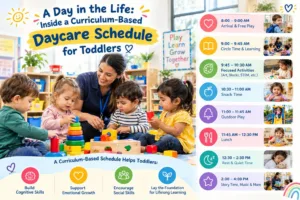
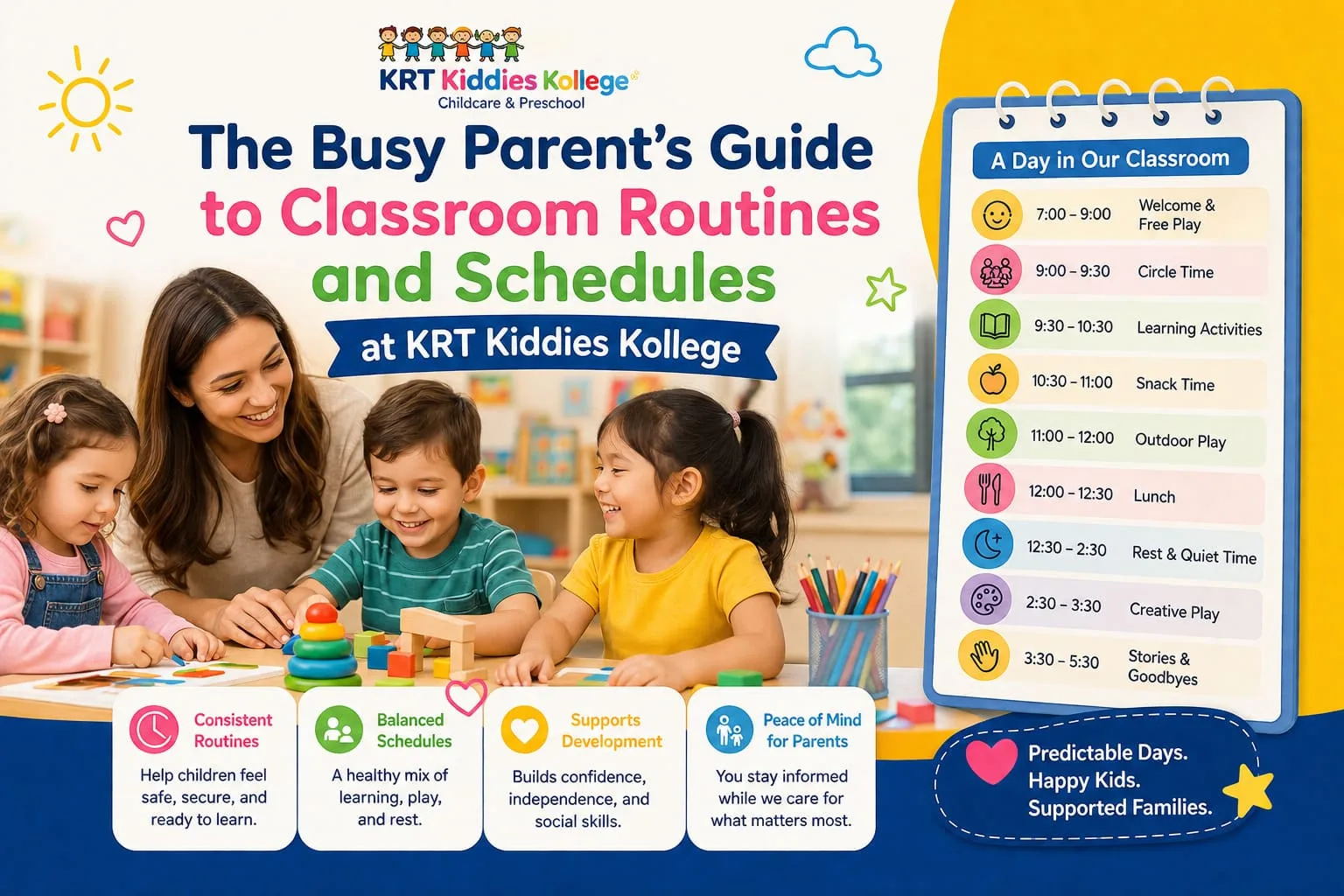
A Day in the Life: Breaking Down the Typical Schedule
A premier daycare langley program does not design its day at random. Every block of time is engineered to match the neurological endurance and physical capacity of growing young minds. Let’s look closely at how a balanced early education schedule operates from morning drop-off to afternoon pick-up.
Morning Welcome and Free-Choice Exploration
The day begins with a soft transition window. Rather than demanding immediate adherence to a rigid task, educators welcome children into a warm environment featuring low-stress, self-directed play.
This initial block allows children to gradually wake up, separate from their parents at their own pace, and engage with sensory bins, building blocks, or reading corners. For busy parents, this flexible arrival period means drop-off can occur calmly without the added stress of a strict time limit.
Morning Circle Time and Interactive Literacy
Once the class has fully gathered, the group transitions into circle time. This structured, educator-guided block is where language development and social skills thrive. Children participate in interactive storytelling, explore the calendar, discuss the daily weather, and practice counting through rhythmic songs.
This dedicated time teaches children how to listen actively, take turns speaking, and focus their attention within a group—all crucial behaviors required for future kindergarten success.
Structured Learning and Fine Motor Development
Following a nutritious morning snack, classrooms dive into deeper academic and tactile exploration. This block is often organized around a specific weekly or monthly theme, such as exploring local ecosystems, animal habitats, or foundational science concepts.
Through painting, tracing, working with safety scissors, and engaging with specialized math manipulatives, children naturally develop fine motor control and spatial awareness.
Outdoor Exploration and Gross Motor Play
Rain or shine, outdoor play is a mandatory pillar of healthy childhood development in British Columbia. Young bodies require ample space to stretch, run, climb, and test their physical boundaries.
Gross motor play strengthens cardiovascular health, improves balance, and allows children to release pent-up energy. Outdoor exploration also acts as a dynamic natural classroom where children learn about seasons, texture, and teamwork through cooperative outdoor games.
Rest, Rejuvenation, and the Power of Quiet Time
One of the most common concerns for busy parents is whether their child will rest well in a group care setting. In a high-quality preschool langley environment, sleep and quiet periods are treated with the same intentionality as reading or math lessons.
Following a hot, balanced lunch, the physical environment of the classroom changes completely. Blinds are drawn, lights are dimmed, and gentle audio soundscapes or classical melodies are introduced.
Each child has a dedicated cot or mat. For children who no longer take afternoon naps, this block transitions into “quiet time,” where they can look through picture books or work on silent puzzles. This intentional pause prevents sensory overload, helping children process the morning’s learning while recharging their minds for the afternoon ahead.
Streamlining the Connection Between Home and Care
The true magic of an early education program occurs when home life and classroom routines work in harmony. If a child follows a completely unstructured schedule over the weekend, transitioning back to daycare on Monday morning can feel incredibly disruptive. Parents can bridge this gap by adopting a few simple classroom habits at home:
- Keep Meal and Rest Times Consistent: Try to align weekend lunch and nap times within a 30-minute window of your child’s weekday schedule. This keeps their biological clock steady and prevents overtiredness.
- Use Clear Visual Warnings: Classrooms frequently use visual timers or verbal reminders like, “In five minutes, we are going to tidy up the toys and wash our hands.” Bringing this clear language into your home routine makes weekend transitions far more peaceful.
- Establish a Consistent Goodbye Routine: Create a short, loving, and predictable departure ritual during morning drop-offs. A specific high-five, a hug, and a reassuring phrase like, “I always come back after an afternoon snack,” provides immense comfort. Avoid lingering, as a swift, confident departure shows your child that they are safe and in good hands.
Frequently Asked Questions
What areas are covered by your services, and what is your typical response time for enrollment inquiries?
Our primary care facility is centrally located in Langley, BC, serving families throughout the immediate neighborhood and surrounding municipalities. For all online or phone inquiries regarding program availability and waitlists, our administrative team maintains a professional standard response time of under 24 business hours to ensure your planning needs are met promptly.
How do educators help children adapt to a structured schedule if they have never been in daycare before?
We understand that every child adapts at their own unique pace. Our dedicated educators use a warm, gradual integration method. We pair new children with supportive peer buddies, utilize gentle visual schedules, and provide extra one-on-one comfort during the first few weeks to help them learn our classroom rhythms with complete confidence.
What happens if my child’s nap schedule changes as they grow older?
Classroom routines naturally evolve alongside your child’s changing developmental milestones. As children grow out of their traditional afternoon nap, we smoothly transition their schedule into a quiet-choice block. This allows them to rest their bodies through silent reading, drawing, or puzzle work without disrupting the rest of the classroom.
How can I look up trusted local child care options close to my home?
When looking into professional care providers, researching accredited daycares centers near me through the British Columbia Child Care Map or regional health authority inspection portals will provide verified details on licensed facilities operating right in your community.
Final Thoughts on Early Learning Routines
A predictable classroom routine does far more than keep a daycare running smoothly; it provides the foundational safety, structure, and joy that young children need to truly thrive. By understanding and embracing these daily cadences, busy working parents can enjoy total peace of mind, knowing their child’s day is filled with a healthy, nurturing balance of education, socialization, physical activity, and essential rest. When you invest in a premier facility that prioritizes these structured experiences, you are setting your child up for a seamless transition into future academic environments and a lifelong love of learning.
If you are looking to secure a warm, dependable, and highly professional early childhood environment for your family, the dedicated team at KiddieKollege is always here to guide you. Our tailored, play-based learning programs are carefully structured to support your child’s emotional growth and physical developmental milestones at every stage. For families looking for elite options mirroring the exceptional care systems of krt kiddies kollege, we invite you to connect with us, tour our beautiful facilities, and see our dynamic classroom routines in action.