Summary
- Asking targeted questions during an on-site visit reveals the authentic daily culture, safety standards, and educational philosophy of a childcare facility.
- Learning which questions to ask during a daycare tour ensures parents examine critical aspects like licensing compliance, teacher qualifications, and hygiene habits.
- In-person tours allow families to witness how educators interact with children, navigate challenging behaviours, and maintain supervision during transitions.
- Observing outdoor safety, secure access protocols, and rest routines helps parents assess both physical and emotional well-being.
- Asking the right questions transforms an overwhelming evaluation into an organized, confident decision for your child’s early education.
Deciding where your child will spend their early formative years is one of the most momentous choices you will make as a parent. While websites, brochures, and digital parent reviews provide helpful preliminary information, nothing compares to stepping inside a facility and seeing the environment in action. Walking through the classrooms allows you to hear the tone of voice teachers use, observe how children engage with learning materials, and inspect physical safety precautions firsthand. Trusted community educators like Kiddie Kollege, situated at 20103 53 Ave, Langley, BC V3A 3T8, Canada, provide dedicated childcare programs that prioritize consistent care, rich play experiences, and transparent communication for local families.
Knowing the right questions to ask during a daycare tour empowers you to look past colourful classroom decorations and evaluate the operational standards that directly influence your child’s daily happiness and development.
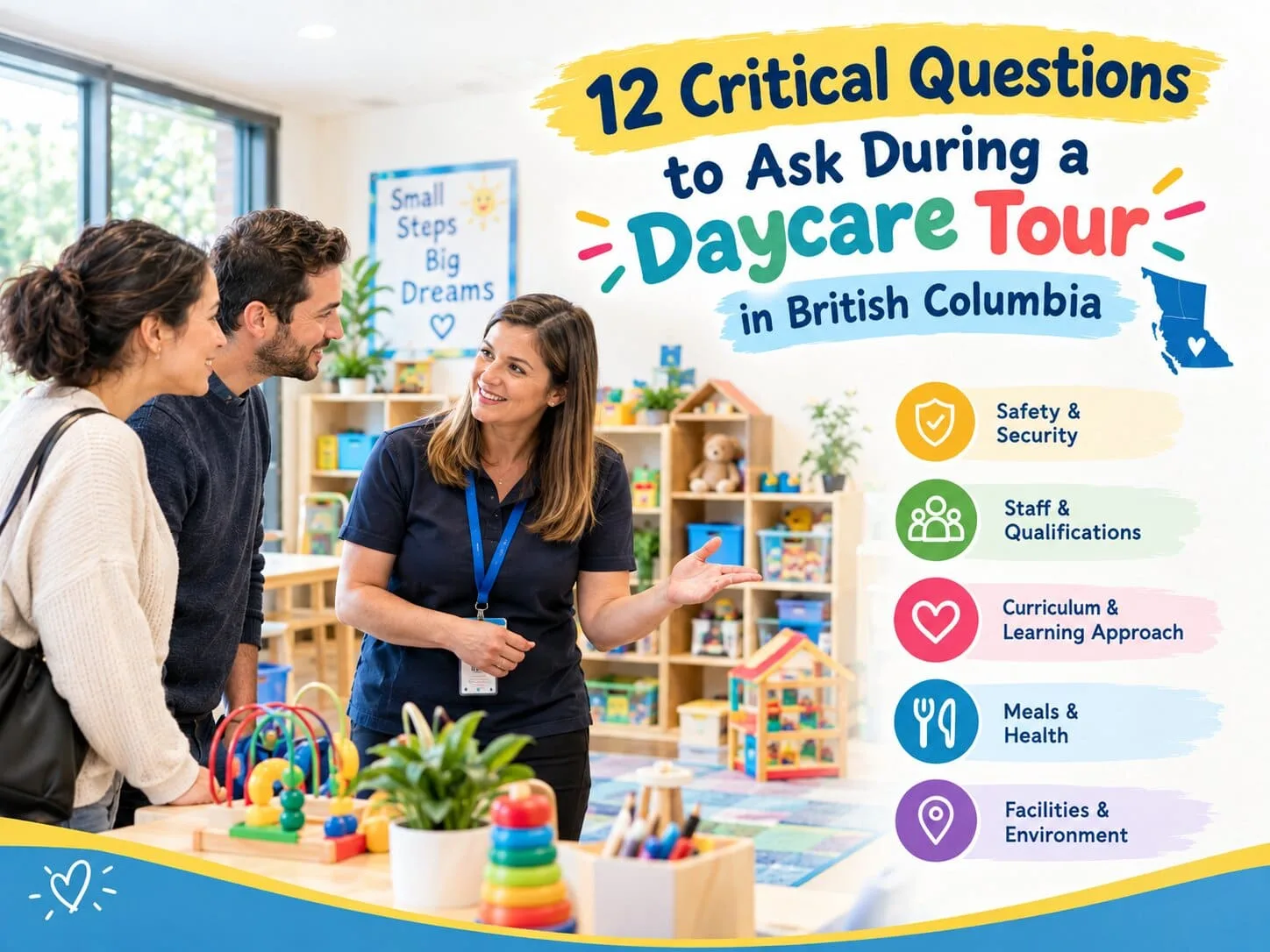
Stepping into an active early learning facility can be sensory-rich and distracting. Energetic toddlers, sensory bins, and busy classroom transitions can pull your focus away from foundational operational details. Bringing a structured list of questions keeps your visit grounded, objective, and productive. Here are twelve critical questions every parent should ask administrators and educators when touring childcare facilities across British Columbia.
1. Are You Fully Licensed Under Provincial Childcare Regulations?
The first and most critical question sets the legal and operational baseline for your entire evaluation. Childcare facilities in British Columbia must operate in full compliance with provincial childcare licensing standards administered by regional health authorities.
Ask the director to show you their current operating licence and confirm the specific age categories their facility is approved to supervise. A fully compliant centre adheres strictly to BC child care licensing regulations, which establish clear legal guidelines for indoor square footage per child, accessible outdoor play spaces, window natural lighting, washroom fixture counts, and continuous fire and life-safety systems. Inquire about the results of their most recent routine health authority inspections. A reputable centre will openly share recent inspection outcomes, discuss how any past observations were promptly addressed, and explain their ongoing compliance routines with total transparency.
2. What Specific Early Childhood Credentials Do Your Educators Hold?
A bright, well-equipped classroom depends entirely on the expertise and emotional presence of the professionals leading it. Inquire deeply about the certifications, education, and continuous training required of every educator on the team.
In British Columbia, lead classroom educators should hold recognized Early Childhood Educator (ECE), Infant and Toddler Educator (ITE), or Early Childhood Educator Assistant (ECEA) credentials registered through the provincial Early Childhood Educator Registry. Ask whether staff maintain current child-focused first aid and CPR certifications. Furthermore, ask about the background clearance procedures completed before any team member enters a classroom. Reliable facilities require comprehensive criminal record checks through the Ministry of Public Safety and Solicitor General for all personnel. Understanding the professional foundation of the teaching team reassures you that your child is guided by professionals who understand emergent literacy, motor planning, and emotional regulation.
3. How Do You Maintain Staff Ratios Throughout the Entire Day?
Provincial licensing regulations define the maximum number of children permitted per educator based on age groupings. However, asking about ratios on paper is not enough; you need to understand how supervision functions during daily operational shifts.
Ask the director how they maintain mandatory ECE qualified staff ratios during peak transition times, such as early morning arrivals, afternoon shift handoffs, educator lunch breaks, and outdoor playground excursions. For instance, infant and toddler groups require an attentive one-to-four ratio, while groups for children aged thirty months to school age follow a one-to-eight ratio. Inquire about their system for covering educator absences: Does the centre maintain a roster of trusted, vetted internal substitute educators who already know the children, or do classrooms combine groups? Consistent, stable supervision ensures that every child’s physical and emotional needs receive immediate attention.
4. What Is Your Educator Retention and Turnover Rate?
Young children thrive on predictability, familiar faces, and secure emotional attachments. High staff turnover can disrupt a child’s sense of routine and security, leading to prolonged morning drop-off tears and behavioural regressions.
Ask the administrator how long the current lead educators have been with the centre. Inquire about what leadership does to prevent educator burnout, support professional development, and create a positive working environment. When early childhood educators feel valued, supported, and fairly compensated, they stay with a centre for years. Long-term staff stability allows teachers to build meaningful, multi-year bonds with children and their extended families, creating a steady, loving classroom community where little learners feel truly at home.
5. What Does a Typical Daily Schedule Look Like for My Child’s Age Group?
Children feel most confident when their day follows a predictable, unhurried cadence. An organized schedule provides a reassuring rhythm of active discovery, nutritious meals, focused circle gatherings, and restorative downtime.
Ask to review a printed or posted copy of the daycare schedule for your child’s age group. Notice whether the day provides a balanced mixture of child-led free play and intentional, teacher-guided group activities. Look for dedicated blocks of time where children can immerse themselves deeply in play-based learning centres, including sensory tables, block construction zones, and dramatic dress-up areas, without being constantly interrupted by rigid scheduling. A thoughtful schedule gives children the autonomy to explore their personal interests while establishing gentle routines that foster focus and executive function.
6. How Are Outdoor Play and Weather Days Managed?
Outdoor movement is essential for healthy physical growth, sensory development, and cognitive restoration. In British Columbia, experiencing outdoor play across all seasons is a fundamental element of high-calibre early learning.
Ask how much time children spend outside each day and what their policies are regarding rainy or chilly weather. Do educators take children outside every single day, or do wet conditions keep classes indoors? A forward-thinking centre believes that there is no bad weather, only unsuitable clothing, and encourages muddy puddle jumping, rain suit play, and outdoor gross motor games throughout autumn and spring. Inspect the outdoor playground during your walk-through: Is the perimeter enclosed by tall, secure fencing with self-latching gates? Are climbing structures cushioned by deep, impact-absorbing surfacing such as rubber or clean wood fibre mulch? Safe outdoor play spaces allow children to build physical confidence with healthy boundaries.
7. What Is Your Behaviour Guidance Philosophy and Discipline Policy?
Every child experiences moments of frustration, fatigue, or social conflict as they learn to share, take turns, and manage big feelings. Understanding how educators respond to challenging moments is essential for emotional safety.
Ask the teaching staff how they handle conflicts over toys, verbal outbursts, or physical reactions like biting and pushing. Professional educators never rely on punitive measures, isolation, public sticker charts, or shaming language. Instead, look for centres that practice positive behaviour guidance, gentle redirection, and proactive co-regulation. Educators should sit at the child’s physical level, validate their emotional experience with calm reassurance, and help them find the words or physical alternatives needed to resolve disputes peacefully. A consistent, empathetic approach to behaviour guidance helps children develop lifelong emotional intelligence.
8. What Exact Protocols Govern Your Illness and Sanitization Routines?
Communal early learning spaces naturally bring children into close contact, making clear, rigorous hygiene policies vital for keeping the entire community healthy.
Ask for a copy of the written daycare illness and safety policy. What specific symptoms require a child to rest at home, such as fevers, unexplained rashes, vomiting, or persistent coughs? How many symptom-free hours must elapse before a child can safely return to the classroom? Inquire about daytime sanitization schedules: How often are shared toys disinfected, especially infant toys that have been mouthed? How are diapering tables and meal surfaces cleaned between uses? Diligent cleaning schedules and consistent handwashing instruction before meals and after outdoor recess significantly reduce seasonal sickness outbreaks.
9. How Are Severe Food Allergies and Nutritional Meals Managed?
Whether the facility provides cooked meals on-site or families send packed lunches, food safety and allergy management require rigorous attention to detail.
Ask how the facility documents and manages severe food allergies, dietary restrictions, and cultural food preferences. In leading centres, child allergy profiles featuring clear photographs, specific allergen triggers, and physician-directed emergency plans are securely posted in food preparation areas away from public view. Ask whether classrooms are designated as nut-free or allergen-aware environments. If the centre prepares snacks or lunches in-house, confirm whether kitchen staff hold current FoodSafe certifications and how menus align with Canada’s Food Guide to provide balanced, nourishing energy throughout the day.
10. What Physical Security and Access Controls Protect the Facility?
Physical security protects children and gives working parents complete peace of mind throughout their busy days.
Take note of the building’s exterior perimeter and primary entry doors. Are external doors kept locked continuously during operating hours, requiring secure key fobs, numerical passcodes, or staff buzz-in verification for entry? Ask about the official pickup authorization procedure: What happens when an emergency contact or alternate family member arrives to collect your child? Trustworthy facilities demand advance written or digital notification from parents, require official government photo identification without exception, and verify contact records before releasing a child to any individual.
11. How Do You Communicate Daily Updates and Developmental Milestones?
A true educational partnership depends on clear, open, and responsive communication between parents and educators.
Ask how educators share daily operational updates and developmental highlights. Does the centre utilize a dedicated, password-protected parent communication app to log diaper changes, nap durations, meal consumption, and daily learning photos in real time? While digital applications are helpful, ask how educators approach face-to-face communication during morning drop-offs and afternoon pickups. How do teachers communicate when a child had a difficult morning or reached a new social milestone? Knowing that educators are accessible and eager to share meaningful updates helps you feel connected to your child’s learning journey every single day.
12. How Do You Support Children and Families During the Initial Transition Week?
Leaving home and entering a new classroom setting can trigger natural separation anxiety for both young children and their parents. A thoughtful centre designs an intentional transition plan to make the first week as comforting as possible.
Ask the director to explain their gradual entry policy. Does the facility welcome gradual orientation visits where a parent stays in the room for short periods, gradually tapering down visit times over several days as the child builds trust with their primary educator? Do teachers encourage children to bring a comforting family photo or a soft transition object from home? A centre that approaches enrolment with gentle patience recognizes that building security takes time, setting the stage for a positive, joyful educational experience for years to come.
A Practical Daycare Tour Checklist for British Columbia Families
When walking through early childhood centres, keep a handy daycare tour checklist BC parents rely on to quietly assess classroom dynamics alongside your prepared questions:
- Atmosphere and Sound: Is the room filled with happy chatter and calm engagement, or chaotic shouting and constant crying?
- Educator Presence: Are teachers sitting on the floor at the children’s eye level, or standing above them talking among themselves?
- Physical Layout: Are low shelves organized with open-ended, child-accessible toys, allowing children to make independent choices?
- Visual Safety: Are electrical outlets safely capped, heavy storage units anchored to walls, and emergency exit routes completely clear?
- Bathroom Cleanliness: Are child-height sinks clean and stocked with soap, paper towels, and step stools for independent handwashing?
- Outdoor Space: Is the playground free of standing water, sharp objects, and hazards, with adequate shade for sunny afternoons?
Taking quiet mental notes on what to look for on a daycare tour ensures you observe the real, unscripted environment rather than solely relying on verbal assurances.
Selecting Outstanding Childcare in the Langley Region
Navigating your early learning options requires finding a balance between exceptional developmental care and practical daily travel routines. When evaluating providers of childcare langley families trust, factor in your daily commuting corridors along 200th Street, 53rd Avenue, Fraser Highway, and the Langley Bypass. Selecting a conveniently located centre makes drop-off and pickup times unhurried and peaceful for the whole family.
Communities across the Fraser Valley feature diverse care models, ranging from licensed multi-age family spaces to larger group centres. Whether you are visiting dedicated preschools in langley or reviewing accredited centres across the region, certified group environments offer distinct advantages in licensing accountability, educator redundancy, and spacious learning environments designed specifically for early discovery. When touring community options, many parents also encounter legacy providers like krt kiddies kollege while evaluating which learning philosophy best matches their child’s personality.
Taking the initiative to book a daycare tour in Langley gives you the firsthand clarity needed to make a confident, well-informed enrolment decision. If your family is currently comparing local providers and searching for a nurturing licensed infant daycare near me or a structured pre school near me, planning an on-site visit remains the single most valuable step in finding your child’s ideal early learning home.
Frequently Asked Questions
How far in advance should parents schedule daycare tours in Langley?
Parents should ideally begin scheduling tours six to twelve months before their target return-to-work or enrolment date. High-quality centres often maintain waiting lists for infant, toddler, and preschool spaces, so early touring ensures you can complete registration paperwork well ahead of time.
What is the typical administrative turnaround time when requesting a tour?
Most established childcare facilities in Langley review tour inquiries daily and respond within 24 to 48 business hours to confirm tour times, share waitlist procedures, and answer initial questions regarding classroom openings.
What specific geographical areas do centrally located Langley child care centres serve?
Centrally situated centres conveniently accommodate families living throughout Langley City, Willoughby, Murrayville, Brookswood, and Walnut Grove. They also offer direct, practical commuter access for parents traveling from neighbouring Cloverdale and Surrey.
Should I bring my child with me on the initial facility tour?
Bringing your child along on your tour is highly recommended. Observing how your little one responds to the classroom environment and watching how educators approach and speak to your child provides immediate, authentic insight into the centre’s warmth and educational atmosphere.
What documents should parents bring when touring a daycare?
While documents are not usually mandatory for an initial walkthrough, having your child’s current immunization records, emergency contact numbers, and any relevant dietary or medical notes on hand allows administrators to review specific registration requirements promptly if an opening is available.
Final Thoughts on Choosing Exceptional Early Learning
Finding an exceptional early childhood centre is an investment in your child’s lifelong curiosity, social confidence, and emotional well-being. By entering every facility armed with clear observations and direct questions, you cut through marketing promises and evaluate the real qualities that keep children safe, happy, and intellectually engaged every single day. Trust your parental instincts: the right centre will welcome your questions with enthusiasm, demonstrate complete regulatory transparency, and provide an environment where your child can flourish.
When you are ready to explore an early learning environment that combines professional standards with genuine warmth, we invite you to connect with Kiddie Kollege. Situated at 20103 53 Ave, Langley, BC V3A 3T8, Canada, our qualified early childhood educators deliver balanced, play-based childcare programs tailored to individual developmental milestones. We invite you to walk through our classrooms, meet our teaching team, and see how our caring routines support young learners at every stage of their early journey.
Taking the time to prepare thoughtful questions to ask during a daycare tour ensures you choose a learning environment that provides total peace of mind for your family and an inspiring educational foundation for your child.