Quick Summary
- Regulatory Oversight: Understand how official licensing provides independent monitoring and structural safety guarantees for young children.
- Safety and Ratios: Explore how strict licensed daycare benefits protect children through verified educator-to-child ratios and health standards.
- Enriched Learning: Learn how play-based learning outcomes foster cognitive, social, and emotional growth in early childhood settings.
- Family Transparency: Discover the importance of open-door policies and daily communication in building long-term parent trust.
- Local Partnership: See how community-focused early learning centers serve families across British Columbia with accredited care.
Searching for early childhood care is one of the most emotional and significant journeys a family undertakes. Parents balance daily work schedules, commuting logistics, and financial considerations while striving to find a environment where their child will feel secure, valued, and inspired. In British Columbia, the early childhood landscape offers a wide variety of care models, ranging from informal home arrangements to fully accredited centers. Choosing a licensed facility provides a foundational framework of health, safety, and educational quality.
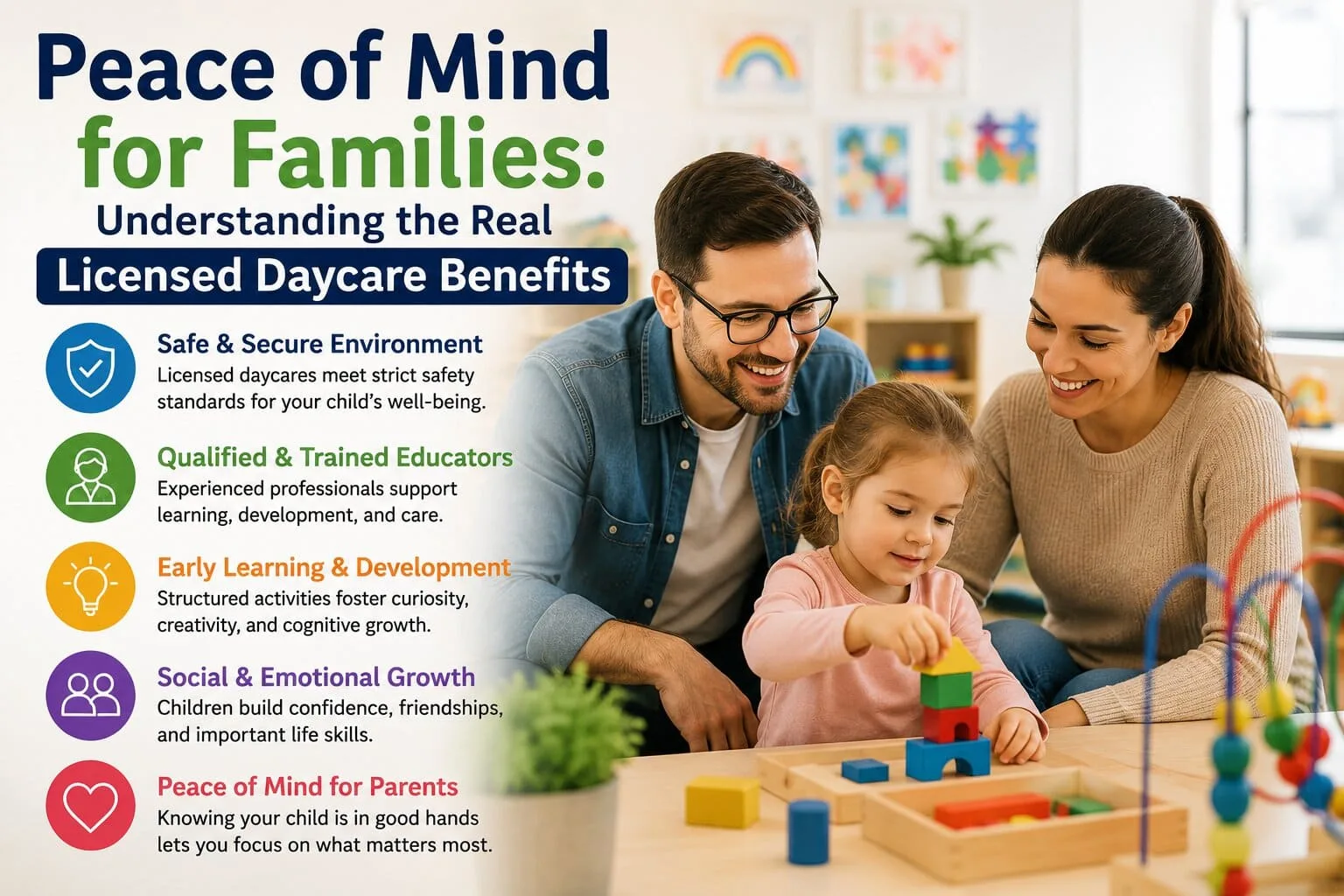
At KiddieKollege, located at 20103 53 Ave, Langley, BC V3A 3T8, Canada, we observe how the structural advantages of true licensed daycare benefits give families total peace of mind, knowing their child is learning and growing in a professional, accountable environment.
The Foundation of Licensing: Regulatory Oversight and Compliance
The primary distinction between informal child care and a licensed facility rests on independent government oversight. In British Columbia, licensed early learning centers operate under the direct regulation of provincial health authorities, such as Fraser Health. This oversight ensures that centers do not operate in isolation; rather, they are subject to strict legal guidelines governed by the Community Care and Assisted Living Act and the Child Care Licensing Regulation.
Maintaining full fraser health compliance requires facility operators to undergo rigorous, unannounced inspections conducted by specialized licensing officers. These comprehensive audits examine every facet of a center’s daily operations. Inspections cover indoor and outdoor structural safety, indoor air quality, clean water standards, emergency response protocols, and complete employee documentation.
When a facility is licensed, inspection reports and compliance records are made accessible to the public. This high level of transparency guarantees that parents do not have to rely solely on promotional claims or word-of-mouth recommendations. Instead, families can review verifiable, independent records confirming that a facility consistently meets or exceeds mandatory safety standards.
Staff Qualifications and Structural Supervision Standards
A facility’s overall care quality relies directly on the expertise and dedication of its educators. Licensed facilities are legally mandated to employ certified Early Childhood Educators (ECE) who have completed extensive post-secondary training in early childhood development, child psychology, health safety, and inclusive education.
In addition to formal post-secondary credentials, all team members in a licensed center must undergo background checks, including vulnerable sector criminal record screening. Staff members must also maintain valid pediatric first aid and CPR certifications. This professional training ensures that educators are skilled in supporting early milestones, identifying developmental delays, and managing medical emergencies calmly and efficiently.
Furthermore, licensing regulations enforce strict caregiver-to-child ratios. These mandatory maximum limits are designed to prevent room overcrowding and ensure every child receives individual attention:
- Infant and Toddler Cohorts (Under 36 months): Maximum 1-to-4 ratio, ensuring intensive one-on-one care and rapid response to physical and emotional needs.
- Preschool Cohorts (30 months to school age): Maximum 1-to-8 ratio, balancing guided group independence with close teacher supervision.
Maintaining low group sizes guarantees that educators can monitor classroom dynamics, provide warm emotional support, and foster safe peer interactions without feeling overwhelmed.
Physical Safety, Sanitization, and Environmental Engineering
Creating safe early learning environments requires careful attention to physical classroom design and daily hygiene routines. Licensed early learning centers are engineered specifically for the physical dynamics of young children.
Classroom layouts prioritize open sightlines, eliminating hidden corners or visual blind spots to ensure educators maintain visual supervision across all activity zones. Furnishings are heavy-duty, featuring rounded edges, and are anchored to structural walls to eliminate tip-over risks. Electrical outlets are child-proofed, sensory tools are verified for non-toxic compliance, and play equipment is selected to eliminate choking or tripping hazards.
Daily health and hygiene procedures are equally rigorous in a licensed setting. Sanitization routines require staff to disinfect high-touch surfaces, toys, sensory tables, and bathroom facilities multiple times throughout the day using child-safe cleaning agents. Handwashing is built directly into daily classroom transitions, teaching children proper personal hygiene after outdoor play, before meals, and after using the washroom.
Additionally, strict sick-child policies protect the broader classroom community. Licensed facilities require children exhibiting fever, vomiting, or contagious symptoms to remain home until symptom-free, significantly reducing the spread of seasonal illnesses throughout the school year.
Open Communication and Building Parent Partnerships
A fundamental pillar of high-quality child care is a strong, transparent partnership between parents and early childhood educators. Families should feel completely confident and welcome in their child’s learning environment at all times.
Leading licensed facilities implement clear open-door policies, inviting enrolled parents to drop in, observe classroom routines, or connect with teachers whenever needed. This open access removes unnecessary barriers between home and school environments, building deep mutual trust between families and staff.
Beyond physical open-door policies, structured communication channels keep parents informed about their child’s daily experiences. Certified educators track daily routines—including meal intake, nap durations, outdoor play participation, and developmental milestones—through secure digital communication tools or detailed daily charts. When parents receive regular, detailed updates about their child’s daily wins and social interactions, drop-off anxiety dissolves, replaced by a secure partnership built on shared goals for the child’s well-being.
The Power of Purposeful Curriculum and Social Growth
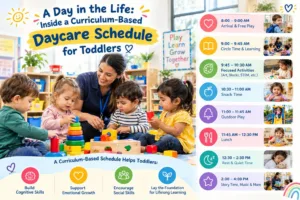
Child care in a licensed setting extends far beyond basic supervision. Certified early childhood educators use evidence-based frameworks to turn everyday play into meaningful learning opportunities.
Achieving rich play-based learning outcomes involves setting up intentional activity stations that encourage children to explore, question, and experiment. For instance, a sensory water table introduces early physics and fluid dynamics, building blocks foster spatial reasoning and early geometry, and creative dramatic play areas cultivate language and empathy. Rather than imposing rigid academic drills, teachers scaffold learning by observing a child’s interests and introducing age-appropriate challenges that expand their critical thinking.
The early childhood development benefits of this approach are extensive:
- Social Intelligence: Children learn to navigate group dynamics, practice sharing, listen to peers, and resolve minor conflicts through words.
- Emotional Self-Regulation: Educators coach children on how to identify big emotions, express their needs calmly, and use self-soothing tools when overwhelmed.
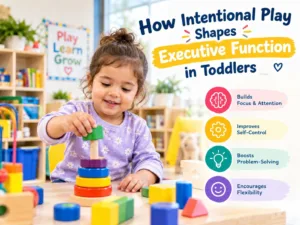
- Executive Functioning: Daily classroom routines teach children to follow multi-step directions, manage personal belongings, and transition smoothly between activities.
- Language and Early Literacy: Immersion in a language-rich environment featuring daily storybook sessions, songs, and conversational dialogues expands vocabulary and pre-reading skills.
Children who experience structured, play-based learning in their early years transition into formal kindergarten settings with high self-confidence, strong social skills, and an intrinsic enthusiasm for learning.
Financial Accessibility and Provincial Fee Subsidies
A significant practical advantage of choosing a licensed child care center in British Columbia is access to government financial support programs. Unregulated or informal child care arrangements are ineligible for provincial funding initiatives, placing the full financial burden directly on families.
Enrolling in a licensed facility unlocks major affordability programs designed to lower monthly child care costs:
- Child Care Fee Reduction Initiative (CCFRI): This provincial program offers direct fee reductions to enrolled families at participating licensed centers, significantly reducing out-of-pocket costs for infant, toddler, and preschool care.
- Affordable Child Care Benefit (ACCB): A monthly provincial subsidy that offers additional financial support to eligible low- and middle-income families.
Licensed operators work directly with provincial agencies to apply these savings directly to family invoices, making high-quality, accredited early childhood care accessible to households across the province.
Establishing Consistency in a Reliable Early Learning Environment
Consistency is vital for an infant or young child’s developing nervous system. Unlicensed care arrangements often depend on a single individual, meaning that if the caregiver becomes ill, takes a vacation, or faces a personal emergency, families are left without care on short notice.
A professional, licensed center offers a reliable early learning environment with structured operating hours and a dedicated team of educators. If a primary teacher is away, certified supply educators step in seamlessly, maintaining established classroom routines and safety standards. This operational reliability gives working parents absolute dependability, allowing them to fulfill their professional commitments without the constant worry of last-minute child care disruptions.
Frequently Asked Questions
How can I check if a child care facility in Fraser Health has any past inspection infractions?
Parents can access public inspection reports through the Fraser Health Community Care Facilities Licensing portal online. This public database provides transparent details regarding recent facility visits, routine safety audits, identified non-compliance items, and proof of corrective measures completed by the operator.
What are your administrative response times for tour requests and new family waitlist inquiries?
Our local administrative team values parent communication. All tour bookings, waitlist status checks, and program inquiries submitted through our website or phone lines receive a response within twenty-four to forty-eight business hours from our intake team.
What happens if my child requires prescribed medication during their time at daycare?
As a licensed center, strict medication administration procedures are followed. Prescribed medications must remain in their original pharmacy container with a clear prescription label. Parents complete a formal medication authorization form, and designated certified educators log every dose administered in an official record.
Which local communities and Fraser Valley neighborhoods does your center serve?
Our centrally located Langley campus serves families throughout the region. We provide accessible care for households living across Willoughby, Walnut Grove, Brookswood, Murrayville, Aldergrove, and central Langley.
How do licensed centers help toddlers manage separation anxiety during their first week?
Educators utilize a gradual, compassionate transition strategy. We encourage brief initial visits, establish clear goodbye rituals, pair children with comforting sensory stations, and offer continuous emotional support. Staff also provide regular photo updates to parents during the first few days to reassure you as your child settles into their routine.
Conclusion / Final Thoughts
Selecting an early childhood environment is one of the most important investments you will make in your child’s foundational development. By opting for an accredited facility, parents secure verified health standards, certified educators, transparent operational practices, and play-based learning frameworks that help young children thrive.
Locating an accredited early learning environment is straightforward when researching options for a licensed daycare near me. If you are looking for a community-focused partner for your child’s early years, we invite you to connect with our campus. At KiddieKollege, we are committed to delivering the full spectrum of licensed daycare benefits, providing families across our community with a safe, transparent, and loving space where children build confidence for life. Contact our Langley admissions office today to schedule your private tour, meet our certified educators, and explore our early learning spaces.