Quick Summary
- Classroom Design: Discover how intentional learning spaces and balanced daily routines power high-quality programs for preschoolers.
- Curriculum Harmony: Explore how play-based exploration and early academic concepts work together to foster deep curiosity and confidence.
- Core Skill Development: Learn how early literacy, hands-on STEM activities, and social-emotional growth prepare children for kindergarten.
- Flexible Scheduling: Understand the differences between full-day and half-day learning options to suit unique family schedules.
- Community Partnership: See how accredited early learning centres across British Columbia provide safe, nurturing environments where young children thrive.
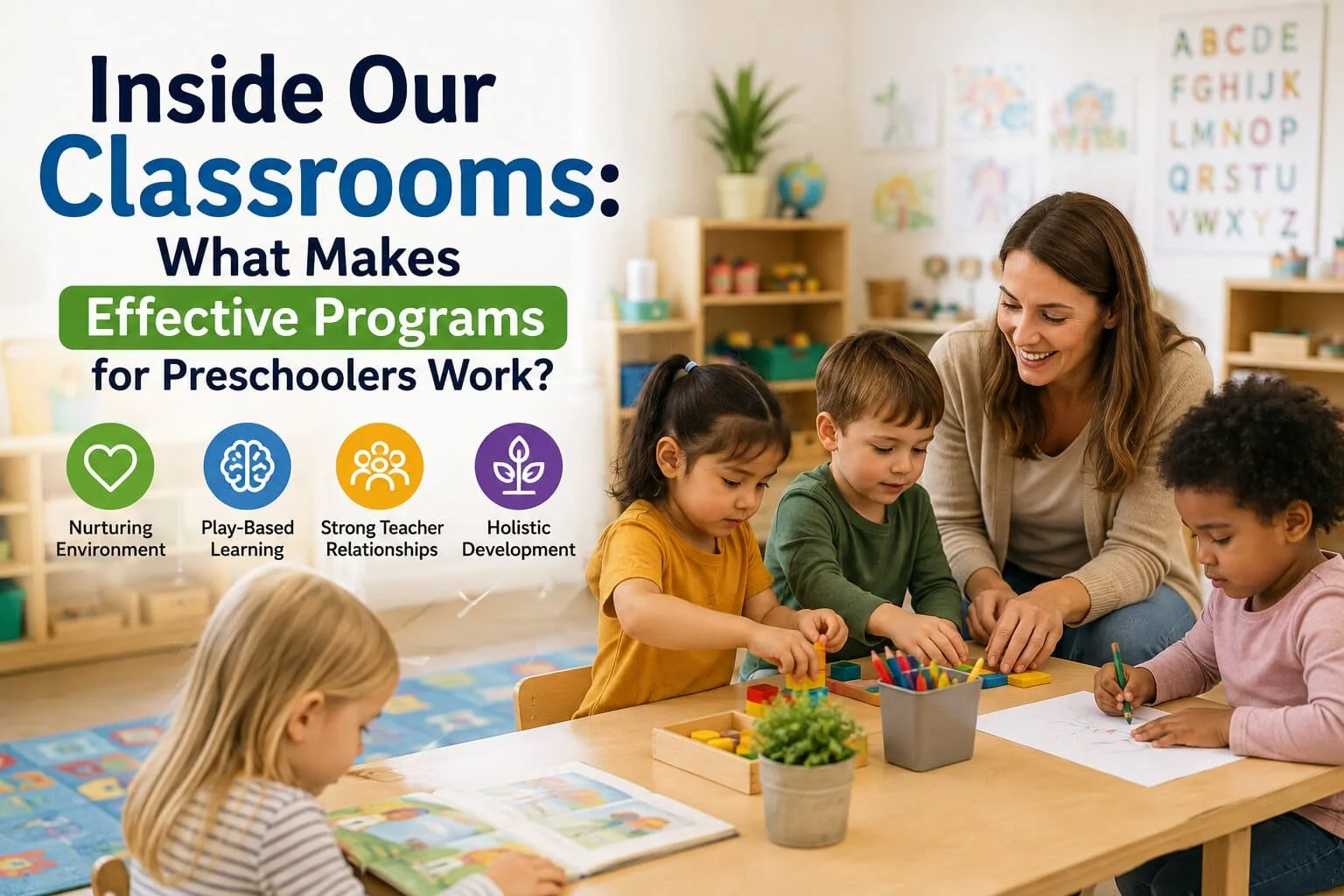
When parents step into an early childhood learning space, they immediately feel the atmosphere. Bright light, welcoming colors, organized activity corners, and the gentle buzz of curious children engaging with their peers all signal a well-run environment. Yet, beneath this joyful daily activity lies a carefully designed educational strategy. High-quality early childhood education is never accidental; it is the result of intentional classroom design, accredited teaching methods, and a deep understanding of how young minds learn best.
At KiddieKollege, located at 20103 53 Ave, Langley, BC V3A 3T8, Canada, we see firsthand how well-structured programs for preschoolers lay the foundation for lifelong academic confidence, emotional resilience, and social intelligence.
The Core Philosophy: Blending Play with Purposeful Learning
A frequent question parents ask when evaluating early childhood education centers centers on the distinction between unstructured play and academic instruction. For many years, educators debated whether early learning should focus primarily on academic drills or open-ended free play. Today, modern early childhood research clearly demonstrates that young children thrive when these two approaches are seamlessly merged.
Play-Based Preschool Programs
Children are born scientists. They explore physical properties by stacking blocks, test cause and effect by pouring water through funnels, and build social understanding by engaging in dramatic pretend play. Play-based learning takes this natural instinct and channels it into structured educational outcomes. Rather than forcing young children to sit quietly at desks for long periods, educators design rich learning environments where play becomes the primary vehicle for discovery.
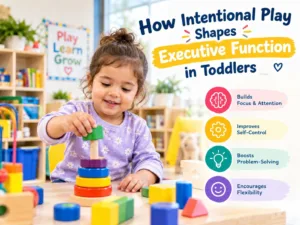
Through play, children develop executive functioning skills—the mental processes that allow us to plan, focus attention, remember instructions, and manage multiple tasks. When a child works with a peer to construct a complex wooden ramp for toy cars, they are actively practicing problem-solving, negotiation, spatial reasoning, and persistence.
Academic Programs for Preschoolers
While play provides the ideal medium for exploration, incorporating intentional academic foundations ensures that children master key developmental benchmarks before entering elementary school. Academic concepts are integrated into daily routines in age-appropriate, hands-on ways. Children practice counting during snack time, recognize shapes in their physical environment, and develop pre-writing muscle strength through clay modeling and sensory drawing.
Combining rich academic goals with experiential discovery creates a dynamic learning space where education feels natural, joyful, and deeply engaging. Children learn to love the process of discovery, building an intrinsic motivation that benefits them throughout their entire academic journey.
Building Essential Communication Through Early Literacy
Literacy is far more than simply learning to recite the alphabet. It encompasses phonemic awareness, vocabulary development, listening comprehension, and the ability to express complex thoughts clearly. A robust early literacy preschool curriculum creates a language-rich environment that surrounds children with meaningful words, rich storytelling, and expressive dialogue throughout the day.
Storytelling and Print Awareness
Daily story times are structured to be interactive and immersive. Certified educators do not simply read words from a page; they ask open-ended questions that prompt children to predict what happens next, analyze character emotions, and connect story themes to their own lives. Books are kept on low, accessible shelves, allowing children to browse freely and develop a genuine comfort with printed media.
Phonemic Awareness and Pre-Writing Skills
Long before children hold a pencil to write formal sentences, they build foundational literacy mechanics. They play rhyming games, sing rhythmic songs that break words into individual sounds, and identify environmental print like stop signs and classroom labels. Fine motor activities—such as stringing beads, squeezing spray bottles, and using child-safe tweezers—strengthen the small hand muscles required for comfortable pencil control later on.
By embedding literacy naturally into every classroom zone, children develop strong verbal confidence and a natural curiosity about reading, setting the stage for smooth elementary school reading comprehension.
Fostering Curiosity with Early STEM Activities
Science, technology, engineering, and mathematics are not subjects reserved exclusively for older students. Young children possess a natural fascination with how the world works, making early childhood the perfect season to introduce foundational scientific thinking. Engaging preschool STEM activities build critical thinking, observation skills, and mathematical reasoning through hands-on exploration.
Scientific Inquiry in the Classroom
In a dedicated discovery zone, children conduct simple, captivating experiments. They observe how seeds sprout in wet paper towels, explore magnetic forces with color-coded wands, and mix primary colors to discover how new shades are created. Educators guide these activities by encouraging children to form simple hypotheses, test their ideas, and describe what they observe using descriptive vocabulary.
Early Math and Engineering Concepts
Mathematical thinking grows out of concrete experiences. Children practice sorting buttons by color, size, or texture, learning the principles of categorization and pattern recognition. They use wooden blocks, balance scales, and measuring tapes to explore weight, symmetry, and structural balance. These early experiences transform abstract mathematical principles into tangible, understandable concepts, removing early anxiety and building deep math confidence.
Nurturing Empathy and Self-Regulation
While cognitive and academic growth are crucial, emotional maturity is the true anchor of early learning success. Kindergarten teachers across British Columbia consistently note that a child’s ability to regulate their emotions, share resources, and follow classroom routines is far more predictive of early school success than early memorization alone. Prioritizing social-emotional learning for preschoolers provides children with the tools they need to navigate complex social settings safely and confidently.
Understanding and Managing Emotions
Young children experience big feelings, but they do not always possess the verbal vocabulary or cognitive control to express them calmly. Educators help children identify their emotions by naming feelings during storybooks and daily interactions. Calm-down corners equipped with soft cushions, visual emotion charts, and sensory tools give children a safe, non-punitive space to practice emotional self-regulation when feeling overwhelmed.
Cooperative Conflict Resolution
When disagreements over shared toys arise, educators step in as supportive coaches rather than punitive judges. They help children use clear words, listen to their peers’ perspectives, and negotiate fair compromises. Through these daily guided interactions, children build deep empathy, learn to respect personal boundaries, and develop strong peer relationship skills.
Easing Elementary School Transitions
The ultimate goal of early childhood education is to prepare children to step into formal elementary schooling with joy, resilience, and independence. Comprehensive kindergarten readiness programs bridge the gap between home environments and formal school expectations.
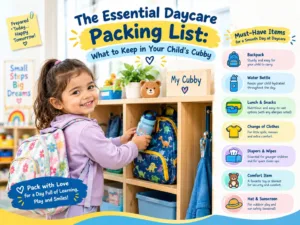
In the final preschool year, daily routines incorporate structured elements that mimic kindergarten dynamics. Children practice listening during carpet gatherings, following multi-step verbal instructions, managing their personal belongings in individual cubbies, and opening their own lunch containers. These practical life skills build incredible personal independence, ensuring that when the first day of kindergarten arrives, children feel capable, secure, and eager to learn.
Safety, Accreditation, and Flexible Scheduling Options
Selecting the right educational setting requires evaluating operational standards, licensing compliance, and daily scheduling flexibility to ensure the facility meets your family’s unique lifestyle and values.
The Standards of Licensed Preschool Programs
Enrolling your child in accredited, licensed preschool programs guarantees that the facility meets strict provincial health, safety, and operational standards set by health authorities such as Fraser Health. Licensing governs strict caregiver-to-child ratios, proper indoor and outdoor square footage per child, comprehensive staff background checks, and stringent sanitization protocols. Knowing these standards are rigorously maintained provides families with immense peace of mind.
Evaluating Private Programs for Preschoolers
Many parents choose high-quality private programs for preschoolers because they offer specialized curricula, dedicated family communication apps, low educator ratios, and enriched classroom materials. Private early learning centers often feature highly tailored environments designed to nurture individual developmental trajectories.
Choosing Between Full-Day and Half-Day Options
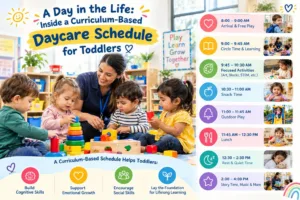
Every family dynamic is unique, which is why flexible scheduling options are essential. Full-day preschool programs provide a comprehensive environment for working parents, combining structured morning learning modules with restful quiet times, afternoon outdoor exploration, and extended social play. Conversely, half-day programs for preschoolers offer a focused, three-hour morning session ideal for families seeking structured socialization and academic exposure while keeping afternoons reserved for home time.
Frequently Asked Questions
How do certified educators determine if a child is meeting age-appropriate developmental milestones?
Our early childhood educators conduct ongoing, observational assessments throughout the school year. Rather than formal testing, teachers document children’s daily progress across cognitive, physical, language, and social domains. We host regular parent-teacher conferences to share portfolio observations, celebrate progress, and collaborate on personalized growth goals.
What are your administrative response times for new family tour inquiries and enrollment questions?
Our administrative office prioritizes clear, prompt communication with local families. All tour requests, waitlist updates, and general intake inquiries submitted through our website or phone lines receive a response within twenty-four to forty-eight business hours from our admissions team.
How does your program accommodate children with food allergies or specialized dietary needs?
Our facility enforces strict allergy management protocols. Classrooms are nut-aware environments, and all educators are certified in first aid and EpiPen administration. Detailed child health plans, complete with photos and specific emergency instructions, are posted discreetly in food preparation areas to ensure absolute mealtime safety.
Which specific regional neighborhoods do your early learning cohorts support?
Our centrally located campus serves families throughout the Fraser Valley. We provide accessible early education and care for households residing across Willoughby, Walnut Grove, Brookswood, Murrayville, Aldergrove, and central Langley.
What strategies are used to help children who experience separation anxiety during drop-off?
We use a warm, individualized transition approach. Educators establish predictable drop-off routines, pair anxious children with gentle comforting activities or favorite play stations, and offer constant emotional support. We also provide parents with quick photo updates shortly after drop-off to give you full peace of mind as your child settles into their morning play.
Conclusion / Final Thoughts
An effective early education environment does far more than keep children occupied during the day. By weaving together intentional academic foundations, experiential STEM activities, early literacy, and rich emotional coaching, quality classrooms foster well-rounded, resilient learners who view the world with curiosity and confidence.
Finding a warm, accredited early learning center is simple when searching for a top-rated daycare near me. If you are looking for a dedicated educational partner to guide your child’s early developmental journey, we invite you to connect with our administrative team. At KiddieKollege, we take immense pride in providing exceptional programs for preschoolers, offering families across our community a safe, transparent, and inspiring environment where children truly thrive. Contact our Langley admissions office today to schedule your private tour, meet our certified educators, and discover how our classrooms can support your child’s bright future.