
Summary
- Quality kiddie care programs help toddlers develop essential social, emotional, and cognitive skills during their most important learning years.
- Structured routines, play-based learning, and nurturing educators create a strong foundation for lifelong growth and confidence.
- Families searching for trusted childcare options in Langley often value safe environments, experienced caregivers, and engaging early learning activities.
- Programs focused on communication, creativity, and independence support healthy toddler development both at home and in the classroom.
- Centres such as KiddieKollege continue to support families seeking dependable kiddie care in Ave, Langley, Canada with child-focused learning environments.
- Choosing the right early learning program can positively influence school readiness, emotional wellbeing, and long-term success.
The toddler years are filled with rapid growth, emotional milestones, and unforgettable first experiences. During this stage, children begin developing language, social skills, independence, and curiosity about the world around them. Because these years are so important, many families carefully search for reliable kiddie care programs that provide both nurturing support and meaningful early learning opportunities.
For parents exploring trusted childcare options, centres like KiddieKollege have become recognised for offering supportive environments designed around healthy childhood development. Families searching for dependable kiddie care in Ave, Langley, Canada often prioritise safety, experienced educators, and programs that encourage learning through exploration and play.
Quality early childhood education is about far more than supervision. It helps children build confidence, emotional security, communication abilities, and positive social habits that shape future learning experiences.
Want to learn more about our daycare programs? Click the WhatsApp button below for an instant chat :
Why the Toddler Years Matter So Much
The first few years of life are often described as the most critical period of brain development. During toddlerhood, children absorb information quickly and learn through interaction, repetition, movement, and exploration.
Simple everyday experiences such as storytelling, music, sensory play, and social interaction help strengthen neural connections that influence future development. This is why high-quality early learning programs focus on creating environments where children feel encouraged, supported, and emotionally safe.
Toddlers are naturally curious learners. They learn by touching, observing, experimenting, and asking questions. When caregivers provide opportunities for exploration in a structured and caring environment, children gain valuable skills that extend far beyond the classroom.
The Role of Quality Kiddie Care in Early Childhood Development
A well-designed childcare program supports every aspect of toddler development. Rather than focusing only on academics, modern early learning centres help children grow socially, emotionally, physically, and cognitively.
Social Development
One of the biggest benefits of toddler childcare programs is social interaction. Young children learn how to share, cooperate, communicate, and build friendships through guided group activities and free play.
Daily interaction with peers teaches important life skills such as:
- Taking turns
- Listening to others
- Expressing emotions appropriately
- Building empathy
- Developing patience
These early social experiences help children become more confident in new environments and prepare them for future classroom settings.
Emotional Growth
Toddlers are still learning how to manage emotions and navigate change. A nurturing childcare environment helps children develop emotional resilience and self-confidence.
Consistent routines and caring educators provide children with a sense of security. Over time, toddlers become more comfortable separating from parents, trying new activities, and expressing themselves independently.
Positive reinforcement and supportive guidance also help children understand boundaries while developing healthy emotional habits.
Language and Communication Skills
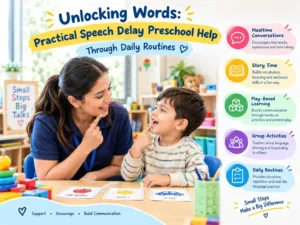
The toddler years are a major stage for language development. Conversations, songs, storytelling, and interactive play help expand vocabulary and strengthen communication abilities.
Educators often encourage children to:
- Ask questions
- Participate in group discussions
- Follow simple instructions
- Describe feelings and experiences
- Engage in imaginative storytelling
These experiences improve both verbal and non-verbal communication while supporting literacy development.
Play-Based Learning and Its Lasting Benefits
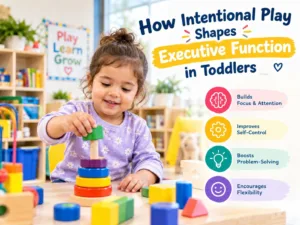
Play is one of the most effective ways toddlers learn. Through play-based learning, children naturally build creativity, problem-solving skills, and confidence while having fun.
Activities commonly included in quality childcare programs include:
- Building blocks and puzzles
- Sensory bins and art activities
- Music and movement sessions
- Pretend play
- Outdoor exploration
- Story circles
These activities help toddlers develop fine motor skills, coordination, concentration, and imaginative thinking.
Play-based learning also encourages independence. Children learn how to make choices, solve small challenges, and explore their interests in a safe and supportive environment.
Why Routine Is Important for Toddlers
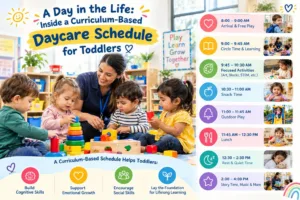
Young children thrive on consistency. Predictable routines help toddlers feel secure and understand what to expect throughout the day.
A balanced childcare routine often includes:
- Arrival and free play
- Learning activities
- Healthy snack times
- Outdoor play
- Quiet or rest periods
- Group interaction sessions
Structured routines support emotional stability while helping children transition smoothly between activities.
Consistency also encourages healthy habits such as proper hygiene, mealtime routines, and independent self-care skills.
Building Independence Through Early Learning
One of the most rewarding parts of toddler development is watching children become more independent. Quality childcare programs gently encourage children to complete simple tasks on their own while still providing guidance and support.
Toddlers begin learning how to:
- Wash hands independently
- Put away toys
- Feed themselves
- Make simple choices
- Follow routines
- Participate in group activities
These everyday accomplishments help children build self-esteem and confidence.
Independence also helps prepare children for preschool and kindergarten environments where self-regulation and responsibility become increasingly important.
The Importance of Safe and Supportive Environments
Parents naturally want reassurance that their child is cared for in a safe, nurturing setting. High-quality childcare centres prioritise cleanliness, supervision, emotional wellbeing, and age-appropriate learning environments.
Features families often look for include:
- Secure entry systems
- Qualified early childhood educators
- Clean and organised classrooms
- Age-appropriate toys and equipment
- Outdoor play areas
- Positive educator-to-child interactions
When children feel emotionally and physically safe, they are more likely to explore, participate, and learn confidently.
Outdoor Learning and Physical Development
Physical activity is essential during early childhood. Outdoor play encourages movement, coordination, balance, and overall physical wellbeing.
Activities such as running, climbing, jumping, and nature exploration support gross motor development while also reducing stress and improving mood.
Outdoor environments also provide opportunities for sensory exploration and curiosity-driven learning. Children become more aware of nature, weather, textures, and their surrounding environment.
Many families seeking trusted childcare options value centres that prioritise active outdoor experiences alongside classroom learning.
Supporting Cognitive Development in Toddlers
Cognitive development refers to how children think, understand, and solve problems. Early learning experiences help toddlers strengthen memory, concentration, reasoning, and decision-making abilities.
Activities that support cognitive growth include:
- Sorting and matching games
- Counting activities
- Story sequencing
- Shape recognition
- Problem-solving exercises
- Creative play scenarios
These experiences encourage critical thinking while making learning enjoyable and engaging.
Quality educators understand that toddlers learn best through interactive experiences rather than formal instruction.
How Childcare Helps Prepare Children for School
School readiness is not just about learning letters and numbers. It also involves emotional preparedness, communication skills, independence, and the ability to interact positively with others.
Children who participate in strong early learning programs often develop:
- Better listening skills
- Improved attention span
- Greater emotional confidence
- Familiarity with routines
- Stronger social interaction abilities
These skills help make the transition into preschool or kindergarten smoother and less overwhelming.
Parents exploring options similar to a kiddie korner day care or structured early learning centres often prioritise programs that balance education with emotional development.
The Value of Experienced Early Childhood Educators
Educators play one of the most influential roles in a child’s early years. Experienced childcare professionals understand how to support different learning styles, emotional needs, and developmental stages.
Strong educators help toddlers:
- Feel emotionally supported
- Explore confidently
- Build communication skills
- Develop healthy routines
- Gain independence gradually
Their guidance creates an environment where children feel encouraged to learn through curiosity and positive interaction.
Families often appreciate childcare providers who communicate openly, provide regular updates, and build trusting relationships with both parents and children.
Why Parents Value Community-Focused Childcare
Choosing childcare is often one of the biggest decisions families make during the early years. Parents want programs that feel welcoming, dependable, and connected to the local community.
Centres such as kiddie kollege learning center often focus on creating environments where families feel included and informed throughout their child’s learning journey.
Community-focused childcare programs can provide:
- Strong parent communication
- Consistent caregiver relationships
- Local family support networks
- Familiar learning environments
- Cultural and social inclusivity
These factors help families feel more confident and connected throughout their childcare experience.
Choosing the Right Daycare Program
Every child has unique needs, personality traits, and learning preferences. When evaluating a childcare program, families often consider several important factors.
Questions Parents Commonly Ask
- Is the environment safe and welcoming?
- Are educators experienced and caring?
- Does the program encourage play-based learning?
- Are routines structured yet flexible?
- How are emotional and behavioural needs supported?
- Is outdoor play included regularly?
Parents searching for trusted options for daycare in langley frequently look for centres that combine learning, safety, emotional support, and strong communication.
A quality childcare experience should support both the child and the family as a whole.
Long-Term Benefits of Quality Early Learning
The positive effects of strong early childhood education can continue long after the toddler years.
Children who experience supportive early learning environments may develop:
- Better communication abilities
- Greater emotional resilience
- Improved social confidence
- Stronger problem-solving skills
- Increased independence
- Positive attitudes toward learning
These foundational skills contribute to future academic success and overall wellbeing.
The memories created during these early years also become meaningful experiences that shape a child’s confidence and sense of belonging.
FAQs
1. What age is best to start kiddie care programs?
Many children begin toddler childcare programs between 12 months and 3 years old. The right timing depends on the child’s developmental readiness and family needs.
2. How quickly can families arrange a childcare tour in Langley?
Most childcare centres in Langley respond to tour requests within a few business days, depending on program availability and scheduling.
3. What areas are commonly served by childcare programs in Langley?
Many centres provide services for families in Langley City, Walnut Grove, Willoughby, Cloverdale, and nearby surrounding communities.
4. What should parents look for in a quality toddler childcare program?
Parents should look for experienced educators, safe environments, structured routines, play-based learning opportunities, and positive caregiver interactions.
5. How can families find trusted kiddie care near me?
Parents can begin by researching local childcare centres, reading reviews, scheduling tours, and asking about educator experience, safety policies, and daily learning activities.
Final Thoughts
The toddler years are filled with important milestones that shape lifelong learning, confidence, and emotional wellbeing. Choosing high-quality kiddie care programs allows children to grow in supportive environments where curiosity, creativity, and social development are encouraged every day.
From play-based learning and communication skills to emotional growth and independence, strong early childhood programs help children build meaningful foundations for the future. Families seeking dependable kiddie care in Ave, Langley, Canada often value childcare environments that combine nurturing support with structured learning opportunities.Centres like KiddieKollege continue to support families by creating welcoming spaces where toddlers can explore, learn, and develop with confidence during these important early years.