
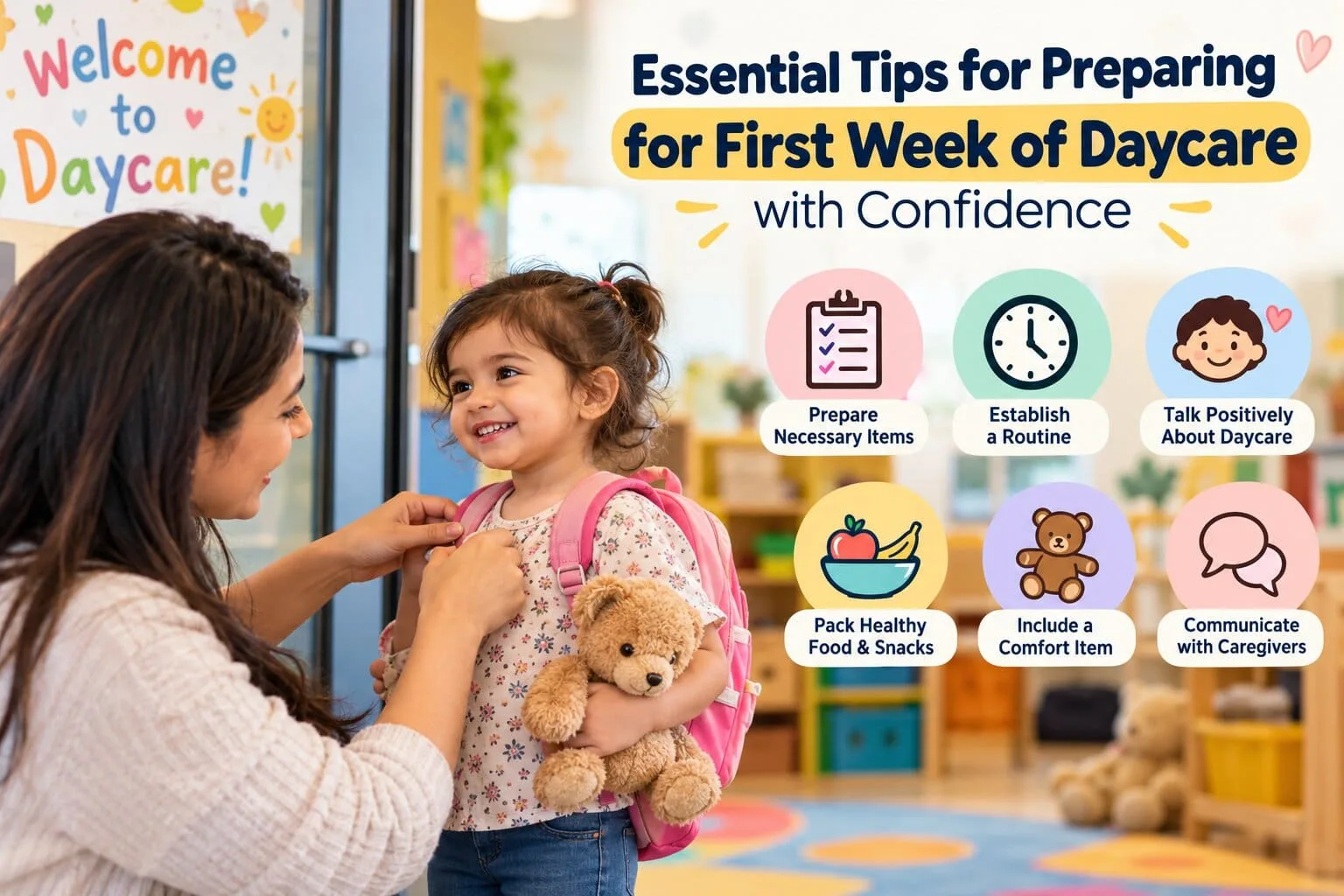
Summary
- Thoughtfully preparing for first week of daycare transforms an intimidating family milestone into a joyful period of early childhood growth.
- Setting up adjusted sleep schedules and trial meal routines at home helps synchronize your toddler’s biological clock with classroom rhythms.
- Mastering a calm, predictable goodbye routine prevents prolonged morning clinginess and establishes secure attachment.
- Organizing weather-ready spare clothes, labeled gear, and comfort items reduces logistical stress for parents and early childhood educators.
- Choosing a dedicated local centre provides the nurturing structure and communication families need to feel supported every step of the way.
Handing your child’s hand over to a caregiver on that very first morning can feel like one of the most emotionally vulnerable steps of early parenthood. Your mind naturally fills with questions about whether they will nap on a cot, eat their lunch alongside peers, or feel comforted when tears surface. These thoughts are completely natural for any caring parent. However, stepping across this threshold does not have to be an overwhelming ordeal filled with uncertainty. When parents take proactive, gentle steps toward preparing for first week of daycare, both adults and little ones gain the steady footing required for a calm start.
For families in the Lower Mainland, centres such as Kiddie Kollege, situated at 20103 53 Ave, Langley, BC V3A 3T8, Canada, provide a trusted Preschool & Kindergarten Program where dedicated educators partner directly with parents to make these early milestones comforting and empowering.
Approaching this milestone with empathy and practical preparation turns apprehension into excitement. Children are remarkably perceptive, readily taking their emotional cues from the trusted adults around them. By establishing clear domestic routines, preparing practical belongings, and understanding the social dynamics of group care, you create a foundation of security that carries your toddler smoothly through their very first week of early learning.
Shifting the Clock: Aligning Home Rhythms with Classroom Schedules
One of the most frequent reasons children experience exhaustion during their initial days in childcare is an abrupt change in their daily timetable. In a home environment, snacks, lunches, and afternoon rests often happen within flexible windows. In a structured classroom, however, group activities run according to a predictable cadence designed to meet developmental needs and group harmony.
Beginning schedule adjustments two to three weeks before the official start date makes a world of difference:
- Shift wake-up times gradually by fifteen-minute increments so morning departures are never rushed or tense.
- Move lunchtime to align with early childhood norms, which typically fall between 11:30 AM and 12:00 PM.
- Standardize the afternoon rest period, offering quiet books or gentle lying-down time around 12:30 PM.
- Offer mid-morning and mid-afternoon snacks at consistent sitting intervals rather than continuous grazing throughout the day.
When your child arrives at school with their biological clock already synchronized to the group schedule, they will not be fighting hunger or sleep deprivation while trying to absorb an entirely new social environment.
The Psychology of Emotional Readiness and Storytelling
Children manage major life changes far better when they know what to anticipate. Abstract ideas like “going to school” can feel intimidating or ambiguous to a toddler who has only known home or family-based care.
Utilizing intentional language, social stories, and dramatic play helps make the unknown feel familiar:
- Read illustrated picture books about first school days together, pausing to discuss how the animal characters felt excited or slightly nervous.
- Role-play with stuffed animals at home, acting out circle time songs, eating a pretend snack from a lunchbox, and having a mama bear return for pickup.
- Talk through the sequence of the day using concrete benchmarks, saying phrases like, “First you play with blocks, then you eat lunch, then you rest, and after outside playtime, Daddy comes back.”
- Avoid making open-ended promises you cannot keep, such as saying you will stay all day or that nobody will cry.
Normalizing all feelings teaches your child that feeling a bit shy or tearful is completely safe and temporary, rather than something they need to fear.
Mastering the Art of the Morning Goodbye
The morning handoff is frequently the most difficult part of the day for parents. It is entirely common to feel a wave of guilt when your child clings to your sleeve or begins to weep at the classroom threshold. However, how you carry yourself during these two minutes sets the emotional tone for their entire morning.
A well-executed daycare drop off routine is fast, warm, and entirely predictable:
- Establish a clear, brief goodbye ritual, such as two hugs, a high five, and a cheerful “I love you and I will be back after afternoon snack.”
- Always say goodbye directly rather than sneaking out while they are distracted by a sensory table, as disappearing unexpectedly can foster separation distress.
- Keep your body language confident, tall, and calm; if you appear anxious or hesitate at the doorway, your child intuitively assumes the classroom is an unsafe place.
- Hand your child physically over to an educator with a smile, allowing the professional to comfort them with a gentle distraction or a book.
Experienced educators understand how to redirect a distressed child quickly. In the vast majority of cases, tears dry up within minutes of a parent stepping out of sight as the fascinating toys and friendly peers capture their attention.
Practical Packing: Setting Up the Cubby for Everyday Success
Having the proper items neatly organized in your child’s cubby provides practical comfort throughout busy classroom hours. When an educator can quickly grab dry pants after an enthusiastic water-table session or slip on waterproof boots for an outdoor puddle walk, your child remains clean, warm, and content.
Taking time to review what to pack for daycare ensures you cover every essential base without overstuffing the space:
- Pack three complete sets of season-appropriate change clothes, opting for comfortable elastic waistbands that support independent toileting.
- Include sturdy indoor footwear with rubber soles and velcro straps that stay securely on small feet during gross motor movement.
- Provide an insulated water bottle with a leak-proof straw that your child can open and close without adult intervention.
- Add one familiar comfort item from home, such as a compact soft plush or small crib blanket for cot rest periods.
Remember to clearly label every single item, from boots and sun hats to snack containers, with waterproof name markers so belongings never get mixed up in group spaces.
Understanding the Rollercoaster of Separation Feelings
Even with careful preparation, experiencing moments of toddler daycare separation anxiety is an entirely healthy, developmentally expected reaction. It demonstrates that your child has formed a secure, loving bond with you. Stepping into a shared room with new adult voices and bustling play zones requires real psychological adaptation.
It helps parents to understand the typical phases of settling in:
- Day One and Two: Often characterized by curious exploration, as the novelty of new toys and bright activity stations holds their interest.
- Day Three to Five: The realization sets in that this is a regular routine rather than a brief visit, which can prompt stronger protests at the doorway.
- Week Two: Emotional peaks level out as the educators become familiar, predictable figures of comfort and safety.
- Week Three and Beyond: Genuine attachment forms with peers and teachers, with drop-offs transforming into enthusiastic greetings.
Recognizing these phases prevents parents from panicking or assuming that normal initial tears indicate their child is unhappy in the program.
Navigating the West Coast Elements: Outdoor Learning
In British Columbia, outdoor play is a core component of daily curriculum regardless of drizzle or crisp autumn air. Running across grass, balancing on logs, and digging in damp sandboxes stimulates gross motor development, sensory integration, and spatial awareness.
Preparing your child for the coastal elements requires specialized, durable outerwear:
- A one-piece waterproof mud suit or heavy-duty splash pants that resist moisture during damp playground exploration.
- Insulated, waterproof rain boots with aggressive tread to keep little feet dry during rainy-day recess.
- A snug knit toque for chilly mornings and a broad-brimmed sun hat for warm afternoon play.
- Water-resistant mittens that allow toddlers to manipulate outdoor loose parts without their fingers getting cold.
Equipping your child with appropriate outdoor clothing guarantees that wet West Coast weather never dampens their natural curiosity or enjoyment of outdoor group discovery.
Managing Fatigue, Big Emotions, and the Post-Daycare Meltdown
Many parents are astonished when their child, who was reported as being an absolute angel all afternoon by educators, throws a monumental tantrum the moment they buckle into the car seat at pickup. This phenomenon is commonly known as restraint collapse.
Throughout the care day, your child worked hard to regulate their impulses: waiting for their turn on the slide, using gentle hands with friends, and following two-step educator directions. When they reunite with you, their primary safe harbor, all that bottled-up emotional effort releases:
- Keep post-pickup schedules calm, quiet, and low-demand, avoiding heavy grocery runs or hectic social outings during the first two weeks.
- Bring a wholesome, blood-sugar-stabilizing snack to the car or stroller, such as sliced cheese, oat bars, or fruit slices.
- Offer a quiet, warm embrace without peppering them with dozens of rapid questions about their day right away.
- Prepare for slightly earlier bedtimes, as the intense sensory stimulation of group play naturally exhausts young developing brains.
Meeting your child with quiet presence and zero judgment during evening transitions helps them re-center and rest up for another engaging day.
Choosing Professional Care Partners Across the Fraser Valley
Finding an exceptional early childhood community makes every transition easier. When evaluating a reputable daycare in langley bc, parents naturally look for experienced educators who approach transitions with patience, structure, and emotional attunement.
Selecting a licensed and dedicated licensed daycare in Langley guarantees that health guidelines, safety protocols, and low staff-to-child ratios are strictly maintained. An experienced early learning team recognizes that a smooth toddler daycare transition requires close parent-teacher communication, transparent updates, and deep consistency between home expectations and classroom rhythms.
Whether you refer to the journey as seeking supportive kiddie care or discovering a dedicated child care service that treats your family like partners, having skilled mentors by your side changes everything. Throughout your research, you may find yourself looking into the welcoming environment of Kiddie Kollege Daycare or searching online directories for an accredited pre school near me to assess curriculum philosophies. For families with infants, exploring options for a fully certified licensed infant daycare near me along familiar corridors like 53rd Avenue or the Langley Bypass ensures a reliable early learning foundation. High-quality langley childcare centres do not just watch children; they cultivate vibrant spaces where independence, social connection, and early literacy flourish naturally.
Taking note of your child’s subtle first week daycare adjustment cues—such as proud smiles when hanging up their coat or pointing excitedly at new classmates—confirms that their world is expanding in beautiful, positive ways.
Frequently Asked Questions
How long does it usually take for a toddler to fully adjust to a new daycare routine?
Most toddlers take between two to four weeks to adjust completely to their new classroom environment. While some outgoing children settle within a few days, others require several weeks of steady drop-off routines before they feel entirely comfortable napping and eating in the group setting. Consistency and patience from both parents and educators are the most important elements during this adjustment period.
What happens if my child refuses to eat or nap during their first week?
It is very common for children to skip naps or pick lightly at their snacks during their first few days due to sensory excitement and new surroundings. Professional educators are trained in gentle soothing techniques, such as sitting quietly beside cots, rubbing backs, or offering familiar foods in small portions without pressure. Appetite and sleep rhythms almost always normalize once the environment becomes familiar.
How quickly do early learning centres in Langley process tour and registration inquiries?
Reputable childcare facilities in the Langley area generally respond to registration questions and tour bookings within 24 to 48 business hours. Visiting the facility in person allows parents to see the classroom layout, meet the program educators, and discuss individual transition pacing before the official start date.
What regional communities do Langley childcare centres generally serve?
Centrally located facilities on 53rd Avenue serve families across Langley City, Willoughby, Murrayville, Walnut Grove, and Brookswood. Because of convenient commuting access to the Fraser Highway and 200th Street, these centres also comfortably accommodate working families traveling from Surrey, Cloverdale, and Clayton Heights.
Can parents stay in the classroom during the initial drop-off days?
Most licensed centres encourage a gradual entry process where parents stay for brief periods during an initial orientation visit. However, once official care begins, educators recommend short, confident goodbyes at the door. Lingering in the classroom can confuse young children regarding boundaries, prolonging their anxiety and making it harder for educators to comfort them and establish a bond.
Embracing the Journey Ahead with Confidence
Stepping into childcare is a significant developmental bridge for your child and a major emotional transition for you as a parent. There may be mornings that feel slightly messy, and there will inevitably be moments of hesitation. Yet, watching your little one build their first friendships, proudly zip their own rain jacket, and sing new circle songs at the dinner table makes every bit of early preparation worthwhile.
If you are looking for an educational partner dedicated to supporting this transition with genuine care and educational excellence, connect with Kiddie Kollege. Conveniently located at 20103 53 Ave, Langley, BC V3A 3T8, Canada, our passionate early learning team provides a high-quality Preschool & Kindergarten Program designed to inspire confidence, foster independence, and celebrate every unique personality. We invite your family to book a personalized tour of our classrooms, meet our dedicated staff, and see firsthand how our warm community supports early childhood discovery.
Take a deep breath, trust the capabilities of your young explorer, and know that thoughtful steps in preparing for first week of daycare will soon turn anxious goodbyes into proud, happy waves at the door.