Summary
- Exploring the overlooked biological link between daily fluid consumption and optimal speech development in toddlers.
- Explains how adequate systemic hydration supports the vocal cords, tongue flexibility, and mucosal tissues needed for clear articulation.
- Highlights how drinking water through open cups and straws strengthens essential jaw and lip coordination.
- Connects daytime hydration to sharper auditory processing, cognitive stamina, and receptive language acquisition.
- Outlines practical, pressure-free fluid habits that families and early childhood educators can implement every day.
When parents track their child’s early communication milestones, their focus naturally gravitates toward interactive storybooks, nursery rhymes, and back-and-forth chatter. We celebrate the very first intentional words, marvel at the sudden burst of two-word combinations, and arrange playdates to encourage expressive language. Yet behind every clear syllable, gentle babble, and budding sentence lies an intricate physical system that depends heavily on systemic biological support. Healthy vocal cords, a flexible tongue, and agile lips all require consistent hydration to perform complex phonetic movements. In early learning settings, supporting foundational speech development in toddlers means looking beyond phonics cards to nurture the physical health of the entire child.
At Kiddie Kollege, located at 20103 53 Ave, Langley, BC V3A 3T8, Canada, our dedicated early childhood educators deliver balanced childcare programs that treat everyday wellness, movement, and hydration as fundamental building blocks for expressive, confident communication.
Understanding how hydration shapes communication can transform the way parents approach daily fluid habits. Rather than viewing water intake solely as a bathroom routine or a warm-weather necessity, looking at water as an active catalyst for language clarity offers fresh perspective. When young children receive steady fluid replenishment, their speech organs function smoothly, their vocal cords remain protected from strain, and their mental stamina stays sharp during long stretches of social play.
The Muscular Mechanics of Toddler Speech
Producing human speech is one of the most mechanically complex tasks a human being ever learns. To say a simple sentence like “I want my ball,” a child must coordinate dozens of muscle groups across the diaphragm, larynx, pharynx, tongue, jaw, and lips in fractions of a second. This mechanical harmony relies completely on the health of muscle tissue and mucous membranes.
The vocal cords, or vocal folds, are delicate layers of mucous membrane stretched across the larynx. As air passes upward from the lungs, these folds vibrate against each other hundreds of times per second to create sound. When a toddler is mildly dehydrated, the natural lubricating fluid covering the vocal folds becomes thick, sticky, and sluggish. Instead of vibrating smoothly, the vocal cords experience friction, leading to vocal hoarseness, raspy vocal tones, and physical strain. A child experiencing early vocal fatigue often speaks less, shortens their verbal expressions, or feels frustrated during back-and-forth conversations simply because talking feels uncomfortable.
Saliva Quality, Articulation, and Oral Motor Agility
Articulation refers to the precise physical movement of the tongue, lips, teeth, and soft palate to shape vocalized air into distinct phonemes. Sounds such as the “t,” “d,” “s,” and “l” require the tip of the tongue to make rapid, delicate contact with the roof of the mouth and the alveolar ridge behind the front teeth.
Sufficient daily hydration ensures healthy, balanced saliva production. Thin, clear saliva serves as a vital biological lubricant that allows the tongue to glide freely across the palate without clinging or dragging. When a child’s mouth is parched, thick oral secretions impede rapid tongue movement, making speech sound muffled, slurred, or heavy.
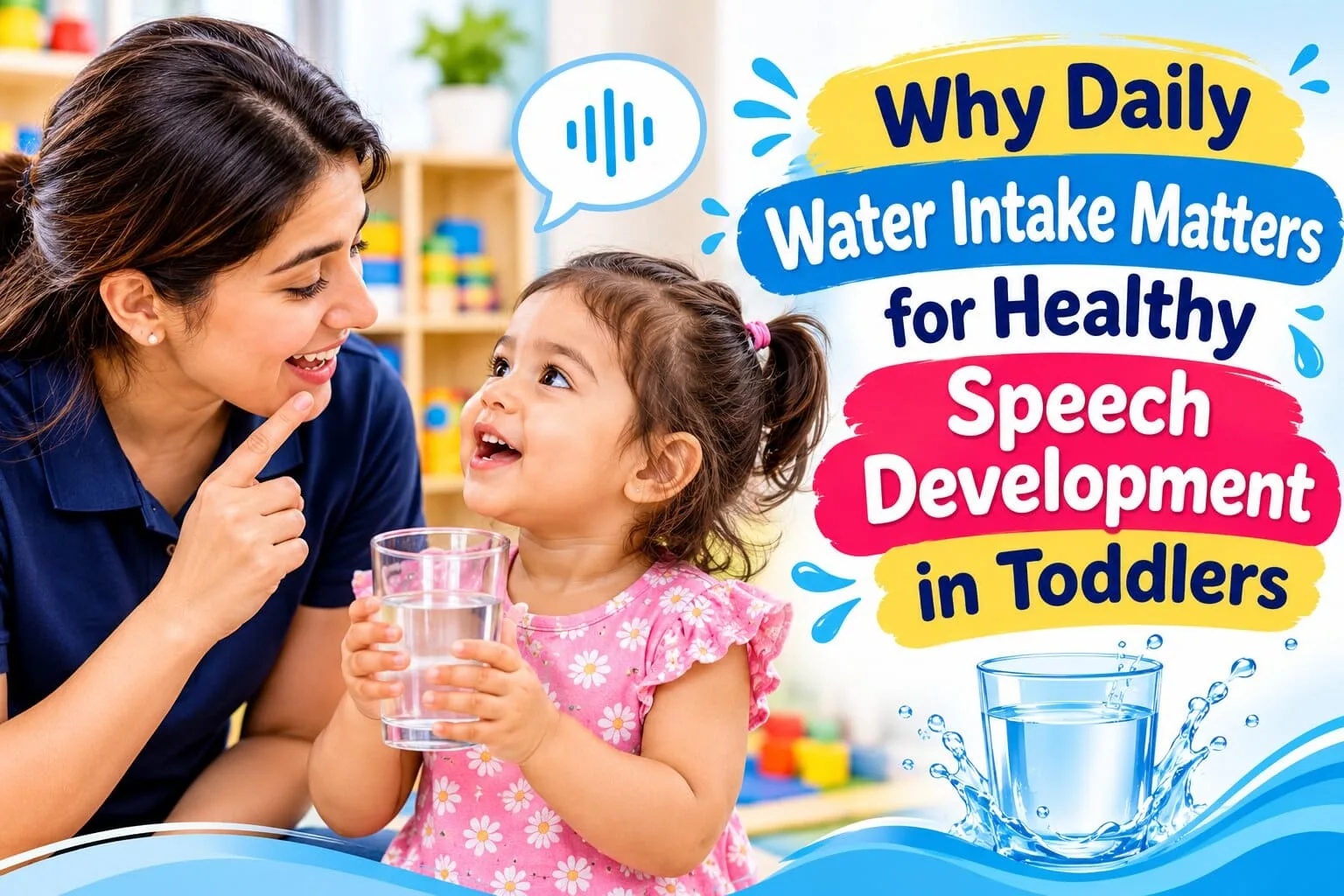
Beyond mucosal lubrication, drinking habits actively build oral motor skills in toddlers. Moving away from infant baby bottles and valved “sippy” cups toward open cups and narrow silicone straws exercises the exact muscle groups required for expressive speech. Sucking water up a straw engages the buccinator muscles in the cheeks, pulls the tongue into a retracted resting position, and strengthens the orbicularis oris muscle circling the lips. These are the very same muscles that allow a young child to pronounce bilabial consonants like “p,” “b,” and “m,” and round their lips for vowel sounds like “oo” and “oh.”
Recognizing Key Communication Benchmarks
Every child develops at their own distinct pace, yet early childhood specialists monitor specific developmental patterns to ensure children are acquiring receptive and expressive tools effectively. Knowing typical toddler language milestones gives families a clear benchmark for when to celebrate progress and when to explore supportive adjustments:
- By twelve months: Using intentional gestures like waving and pointing, imitating speech sounds, and uttering one or two meaningful words like “mama” or “dada.”
- By eighteen months: Using at least ten to twenty spontaneous single words, identifying familiar objects when named, and humming or vocalizing during play.
- By twenty-four months: Combining two distinct words into simple phrases such as “more milk” or “big dog,” imitating overheard conversations, and following simple two-step directions.
- By thirty-six months: Speaking in clear three- to four-word sentences, asking “what” and “where” questions, and speaking clearly enough that familiar caregivers understand most of their ideas.
If a child struggles to produce clear sounds or shows sudden reluctance to communicate, looking at physical factors like oral hydration and muscular ease can often reveal gentle, non-invasive ways to support their progress.
Addressing Concerns Regarding Speech Delays
When a child exhibits a noticeable speech delay in toddlers, parents often experience profound worry. Potential contributing factors can range from chronic middle-ear fluid accumulation and tongue-tie to auditory processing challenges or broader developmental delays. In these situations, comprehensive evaluation by an accredited speech-language pathologist is always the gold standard of care.
However, experienced developmental specialists also evaluate the child’s daily physical environment, including daily nutrition, hydration, and chewing mechanics. If a toddler’s oral tissues are perpetually dry, or if they consume large amounts of sugary, dairy-heavy beverages that coat the throat in thick residue, the physical act of vocalizing requires far more effort. Ensuring adequate water intake clears oral residue, keeps the pharynx comfortable, and reduces the physical effort needed to join in spoken dialogue, providing an ideal physiological baseline for speech therapy and language intervention to succeed.
How Much Water Does an Active Toddler Really Need
Parents often ask about practical fluid benchmarks. When wondering how much water should a toddler drink, health authorities and pediatric dietitians recommend that toddlers aged one to three years consume approximately four cups, or roughly thirty-two ounces, of fluids daily. This total includes plain drinking water alongside whole milk and the natural water content found in hydrating whole foods.
As children reach ages four and five, daily fluid targets expand to approximately five cups, scaling higher on warm afternoons or during prolonged bouts of aerobic playground play. Plain, filtered water should serve as the primary source of hydration throughout the morning and afternoon. While milk remains an excellent source of protein and calcium during seated meals, offering water throughout learning and play hours ensures that oral tissues stay clean, fresh, and free from sticky milk proteins that can cling to the back of the palate.
The Cognitive Connection: Hydration, Attention, and Receptive Language
Language acquisition does not take place in a vacuum; it requires active listening, cognitive processing, working memory, and social attention. A toddler must hear a word spoken in context, interpret its meaning, commit that sound sequence to memory, and mentally organize their vocal organs to repeat it.
Even mild dehydration—defined as a fluid deficit of just one to two percent of body weight—impairs cognitive performance, working memory, and sustained attention in young children. An under-hydrated toddler is more prone to distractibility, brain fog, and irritability. In an early learning classroom, an under-hydrated child may struggle to follow multi-step instructions during circle time, tune out teacher storytelling, or become easily overwhelmed by sensory background noise. By contrast, maintaining adequate fluid levels keeps mental processing speeds high, allowing toddlers to absorb linguistic cues, process phonemic nuances, and respond to their peers with enthusiasm.
Enriching Communication Through Classroom Activities
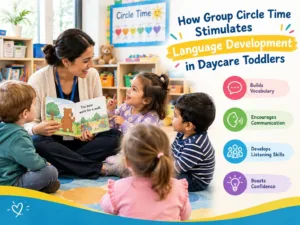
Creating a language-rich environment involves weaving verbal interaction and physical wellness into every hour of the day. In high-standard early childhood settings, educators integrate engaging toddler communication activities into daily routines:
- Interactive circle time songs that encourage rhythmic clapping, rhyming, and vocal play.
- Reading vibrant picture books where teachers ask open-ended questions like, “Where is the puppy running?”
- Setting up collaborative dramatic play corners where children practice pretend conversations while running a mock market or kitchen.
- Incorporating language games into meal and hydration breaks, such as singing rhyming songs while filling water cups or describing the refreshing temperature of the water.
When educators model clear, conversational language while actively maintaining comfortable fluid breaks, children naturally link physical comfort with expressive social engagement.
Choosing the Right Early Learning Community in Langley
The everyday environment where your child spends their waking hours dramatically shapes their communication, confidence, and physical health. Families seeking an accredited langley daycare naturally look for clean classrooms, gentle teaching practices, and engaging learning materials.
Enrolling your child in an intentional licensed daycare in Langley guarantees that provincial health regulations, educator-to-child ratios, and safe supervision standards are strictly upheld. High-quality centres understand that language development flourishes when physical needs are met with warmth, patience, and consistency.
Whether families are comparing options at a reputable day care langley campus, exploring full-spectrum early learning models, or selecting a dedicated child care service that prioritizes both social-emotional and physical well-being, experienced educators make a meaningful difference. Parents frequently look for programs that provide comprehensive, multi-age care or browse local directories for a caring pre school near me that emphasizes language acquisition. Families returning to work early may also search for an accredited licensed infant daycare near me close to 53rd Avenue or the 204th Street corridor to ensure their child’s early developmental foundations are supported from the very beginning.
Frequently Asked Questions
How can I tell if my child is dehydrated enough to affect their speech?
Early indicators of dehydration include dry, chapped lips, a coated or sticky tongue, raspy or hoarse speech tones, and a sudden drop in verbal willingness. If a child seems unusually irritable, fatigued, or exhibits dry mouth tissues after active play, offering small, frequent sips of cool water can quickly restore oral comfort and energy.
What are the best drinking vessels for promoting speech motor skills?
Speech-language pathologists widely recommend open cups and straw cups rather than hard-spout sippy cups. Open cups teach children to coordinate their lips and control liquid flow with their tongue, while straw cups encourage lip closure, cheek stability, and tongue retraction, which directly support accurate consonant articulation.
What is the typical administrative turnaround time for parent inquiries in Langley?
Reputable childcare centres in Langley generally reply to parent tour bookings and enrollment questions within 24 to 48 business hours. Reaching out directly through online contact forms or telephone provides families with the fastest route to discussing class availability and scheduling an in-person facility visit.
What neighborhoods and travel corridors are served by central Langley facilities?
Centres conveniently located on 53rd Avenue serve families across Langley City, Willoughby, Murrayville, Brookswood, and Walnut Grove. Thanks to accessible connections along Fraser Highway, 200th Street, and Highway 10, these centres are also ideally positioned for working parents commuting from Surrey, Clayton Heights, and Cloverdale.
Can drinking water alongside snacks help children with articulation?
Yes. Taking sips of water during and after snacks rinses away lingering food particles and oral residue, particularly from starchy foods like crackers or dairy products like cheese. This keeps the tongue, lips, and roof of the mouth clean and agile, allowing for immediate, clear speech during subsequent group play.
Supporting Confident, Articulate Learners for Tomorrow
A child’s voice is their primary bridge to the world around them. When a toddler has the words to express their needs, share their ideas, and connect with peers, their self-esteem and emotional security flourish. By recognizing the critical role that proper hydration plays in lubricating vocal folds, supporting tongue agility, and fueling cognitive attention, families and educators can easily turn a simple glass of water into a powerful speech support tool.
If you are looking for an early childhood environment where physical wellness, loving care, and communicative milestone development go hand in hand, reach out to Kiddie Kollege. Situated at 20103 53 Ave, Langley, BC V3A 3T8, Canada, our experienced educators provide enriching childcare programs designed to inspire curiosity, nurture expressive language, and build healthy daily habits in every child. We warmly invite you to book a personal tour of our classrooms, meet our passionate team, and experience firsthand how our programs support your family.
By combining positive language routines with healthy daily fluid habits, we provide the strongest biological foundation for vibrant, clear, and joyful speech development in toddlers.