Quick Summary
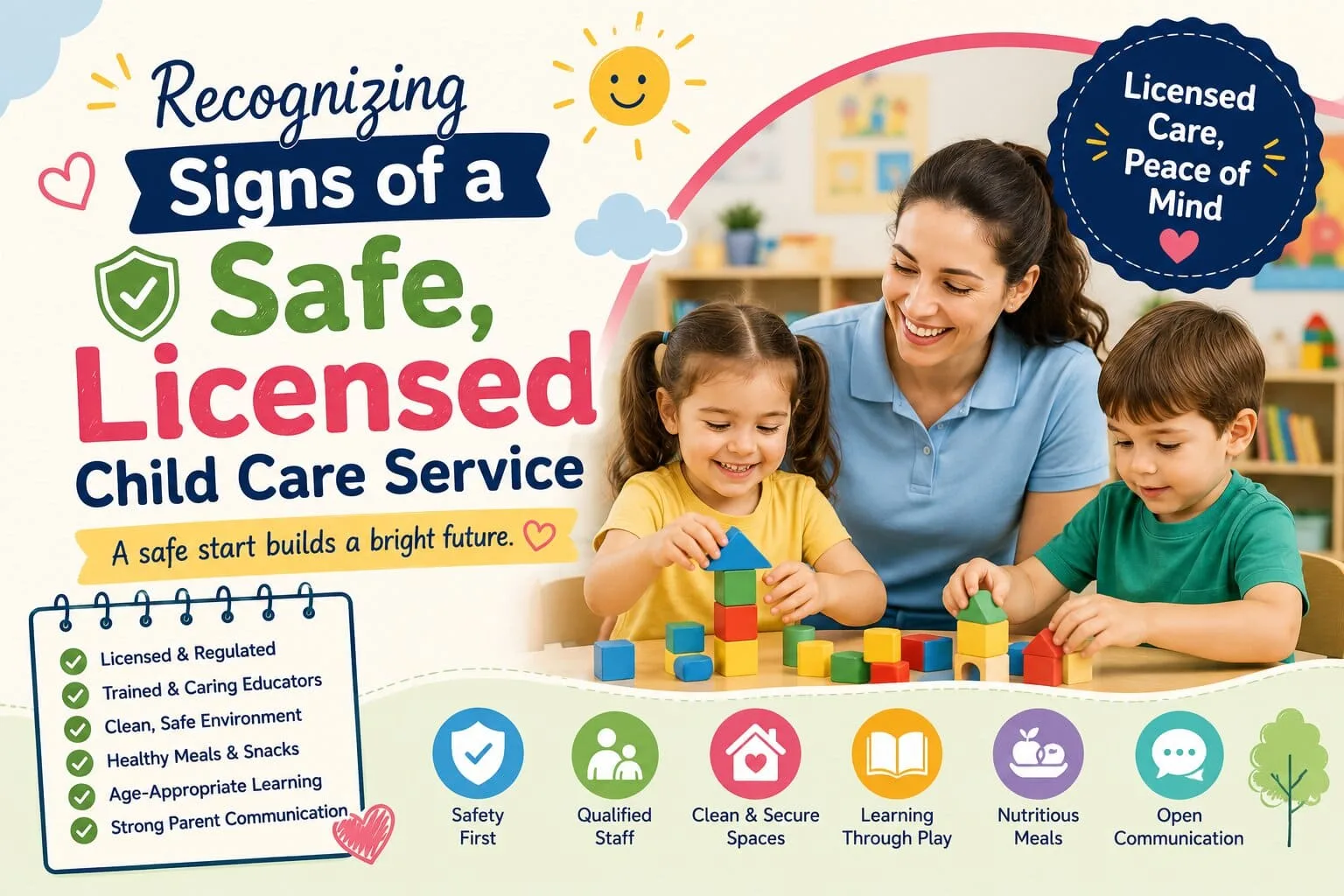
- The Baseline Standards: Discover the critical administrative, health, and structural markers that separate a fully compliant, licensed provider from unregulated care.
- Environmental Security: Learn how to evaluate indoor and outdoor spaces for physical hazards, safety barriers, and child-friendly design choices.
- Staffing Verifications: Understand the exact training, certifications, and background checks required for qualified early childhood educators.
- Transparent Communication: Identify the tracking tools, daily logs, and open-door policies that demonstrate true operational integrity.
- Your Local Guide: Understand how regional standards protect families looking for a premium, community-trusted child care service.
For young families navigating the early years of parenthood, finding a trustworthy care environment is both a significant logistical milestone and a deeply personal decision. The process of evaluating local options can quickly become overwhelming, filled with varying operational philosophies and regulatory terms. Parents naturally want an environment that offers absolute physical safety, emotional security, and a rich foundation for early learning. Knowing how to systematically verify a facility’s credentials and recognize the signs of high-quality operations is essential to making a confident decision.
At KiddieKollege, located at 20103 53 Ave, Langley, BC V3A 3T8, Canada, we believe that an authentic, premier child care service should always present its licensing compliance and safety protocols with complete transparency, giving families absolute peace of mind as their children take their first steps into the wider world.
The Regulatory Foundation: Unpacking the Licensing Mandate
When starting your search, it is vital to understand the fundamental legal and structural differences between licensed and unlicensed early childhood environments. A fully licensed provider is heavily regulated by provincial authorities and local health authorities, such as Fraser Health in British Columbia. These bodies enforce strict legislation governing everything from square footage requirements per child to nutritional standards and emergency preparedness.
An authorized facility must display its official provincial license prominently near the main entrance, where parents can easily verify its validity. This document confirms that the operator undergoes rigorous, unannounced inspections from regional licensing officers several times a year. These thorough evaluations ensure the facility continuously complies with strict health and safety codes. Choosing a registered space guarantees that your child is protected by a comprehensive legal framework designed solely to safeguard young children.
Conversely, unregulated or informal arrangements operate completely outside this official oversight system. They are generally restricted to caring for a very small number of children and are not legally bound by the same strict safety, spacing, or training mandates. While informal options may offer short-term convenience, they lack the systemic layers of safety, professional accountability, and regulatory protection that define a certified facility.
Evaluating the Physical Space: Indoors and Outdoors
A safe early learning center is designed with meticulous attention to detail, creating an environment built entirely around the physical vulnerabilities and natural curiosity of young children. When touring potential locations, parents should look past the surface decorations and carefully examine the core structural safety features of the building.
The indoor areas should be entirely free of visible hazards, with all electrical outlets securely covered and heavy shelving units firmly anchored to the walls to prevent tip-overs. Look for clean, open floor plans that allow children to move freely without risk of injury. Dedicated infant spaces should feature specialized, quiet sleeping rooms that strictly follow safe sleep guidelines, including clean, separate cribs free of loose blankets or soft toys. The main play areas should display an organized, clutter-free look, with high-quality toys kept on low, child-accessible shelves so children can choose activities safely without relying constantly on adults.
The outdoor play spaces require an equally thorough safety assessment. A premium facility must feature a sturdy, secure perimeter fence with child-proof locking gates to ensure no child can wander away unsupervised. The play structures should be appropriately sized for the specific age groups using them, showing no signs of wear, rust, or loose bolts. Look for thick, shock-absorbing impact surfaces under all climbing areas—such as thick rubber matting or deep engineered wood chips—to protect children from accidental falls. Additionally, look for adequate shaded areas to protect young skin from afternoon sun exposure during outdoor play sessions.
The Staffing Standard: Verifications and Ratios
The heart of any early childhood environment is its team of educators. Physical safety measures are only fully effective when supported by a highly trained, deeply vigilant professional staff. During your site visits, do not hesitate to ask detailed questions regarding employee qualifications, screening processes, and daily classroom ratios.
A high-quality center day care program ensures that its lead educators hold recognized Early Childhood Education (ECE) certifications or specialized infant-toddler training. This academic training ensures that the staff understands the complex layers of child development, positive behavior guidance, and early cognitive stimulation. Furthermore, a safe provider requires every single employee—including administrative staff and kitchen personnel—to pass a comprehensive criminal record check and maintain valid, up-to-date certification in Child CPR and First Aid.
Classroom ratios are another critical safety indicator. Licensed facilities must strictly maintain provincial child-to-staff ratios, which vary by age group. In dedicated childcare centers, infants require significantly more individual attention than older preschoolers, necessitating a lower ratio. When you observe a classroom, the staff should appear calm, collected, and completely in control of the room. If the educators seem visually overwhelmed, rushed, or unable to respond promptly to individual children’s cues, it often indicates the facility is operating at the absolute limit of its capacity, which can compromise overall supervision quality.
Health, Hygiene, and Nutrition Standards
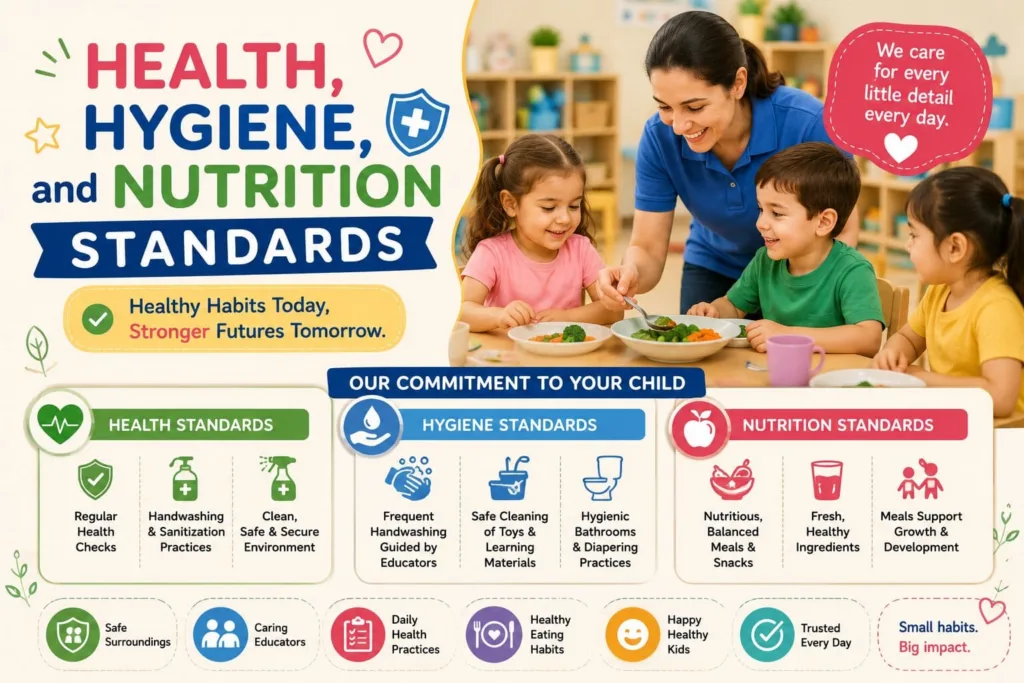
A safe early years center prioritizes everyday health, hygiene, and nutrition routines just as highly as physical building security. Because young children are naturally vulnerable to seasonal illnesses and common childhood germs, the facility’s sanitation protocols must be rigorous, systematic, and strictly enforced.
Walk through the washrooms and food preparation areas to evaluate cleanliness firsthand. In a professional day care centre, handwashing stations must be easily accessible to both children and staff, equipped with child-height sinks, automated soap dispensers, and clean paper towels. Educators should visibly model proper hand hygiene throughout the day, ensuring children wash thoroughly before meals, after washroom use, and following outdoor play blocks. All toys, tables, and high-touch surfaces must undergo regular sanitization using hospital-grade, child-safe cleaning solutions to stop the spread of germs.
Nutrition management requires a similarly meticulous approach, particularly within a dedicated infant daycare environment. The facility must show a clear, highly organized system for labeling and storing breastmilk, formula, and specialized dietary items provided by families. If the center provides daily meals, ask to review the seasonal menu rotation to ensure it aligns fully with national nutritional guidelines. Furthermore, the kitchen staff must maintain strict allergen isolation procedures, ensuring children with severe food allergies are completely protected from cross-contamination risks during meal times.
Transparent Communication and Open-Door Policies
True operational safety is built upon a foundation of absolute transparency and open, honest partnership between educators and parents. A facility that keeps its operational routines hidden or restricts parent access should be approached with caution.
A highly professional day care centres framework champions an active open-door policy, welcoming parents to visit the campus or check on their child at any time without needing an appointment. When you drop off or pick up your child, the administration should facilitate clear, unhurried communication with your child’s primary educator. A safe center does not hide classroom challenges or minor incidents; instead, it provides detailed, written incident reports promptly if a child experiences a minor bump or scrape, ensuring families stay fully informed.
Modern early years settings often enhance this transparency by using secure, real-time digital communication logs. In a premium baby daycare room, these tracking platforms let parents check their phone to see exactly when their child ate, how long they napped, and which early learning activities they enjoyed that morning. This immediate, open loop of information builds deep, long-term trust, ensuring parents feel completely connected to their child’s daily care experience.
Early Learning Integration and Behavioral Guidance
While physical health and safety standards form the essential foundation of child care, a high-quality center must also prioritize a child’s psychological and emotional well-being. A truly safe environment nurtures a baby’s growing mind through intentional, research-backed early childhood education methods.
Inside a modern daycare environment, educators utilize positive, constructive behavioral guidance strategies rather than outdated punitive measures or arbitrary time-outs. When young children experience big feelings or normal peer conflicts over a shared toy, educators step in calmly to practice co-regulation. They help the children identify their emotions, use calm words, and find mutually positive solutions. This gentle approach creates a deeply supportive classroom culture where children feel safe to express themselves without fear of harsh judgment.
Furthermore, an authentic right start daycare curriculum avoids passive entertainment, completely banning television screens and tablet devices from the classroom. Instead, learning spaces are filled with rich, open-ended tactile materials that spark natural curiosity. Refreshed toddlers spend their time exploring textured loose parts, working on fine motor puzzles, and participating in rich storytelling blocks that expand their cognitive word banks. This holistic combination of physical safety, emotional respect, and intentional early learning turns a standard child care routine into a wonderful launchpad for lifelong curiosity and growth.
The Logistical Advantage of Local Excellence
For families managing busy professional schedules, choosing a certified facility brings significant logistical advantages that help balance career demands with peaceful family dynamics. An established, fully licensed daycare provider offers a level of operational reliability that informal home arrangements simply cannot match. The center does not close unexpectedly due to staff personal days, and all health, safety, and operational standards are strictly monitored by provincial licensing boards.
Additionally, enrolling your child in an intentional, community-centered kiddie daycare creates a vital support network of local families who are navigating the exact same parenting milestones. Sharing this journey within an authorized early years setting builds deep lifelong connections, anchors your family within the neighborhood, and provides the ultimate peace of mind that your child is growing up in the most professional, supportive hands possible.
Frequently Asked Questions
How can parents independently check a child care provider’s inspection history?
In British Columbia, regional health authorities maintain public online community care inspection portals. Parents can look up any licensed facility to review its complete inspection history, check for any past non-compliance infractions, and see exactly how quickly the management resolved those administrative updates.
What are the administrative response timelines for standard enrollment inquiries?
Our local administrative office values the busy schedules of working families. All intake applications, waitlist status updates, and private campus tour requests are processed within a prompt twenty-four to forty-eight business hour window by our center’s enrollment coordinators.
How does a licensed center manage children who develop a sudden fever during the day?
We maintain a dedicated, comfortable isolation health zone where a child can rest safely under direct adult supervision while their parents are contacted. In accordance with provincial health regulations, we maintain strict health policies that require children to remain home until they are symptom-free for twenty-four hours.
Which specific local geographic neighborhoods does your intake service accommodate?
Our centrally located campus serves as a premier regional hub for commuting families throughout the Lower Mainland. We proudly support households residing across Willoughby, Walnut Grove, Brookswood, Murrayville, Aldergrove, and the entire Langley City center.
Can parents request a private tour of the facility before joining the waitlist?
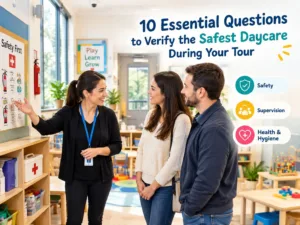
Yes, we highly encourage families to schedule an individual campus walkthrough. This personalized visit allows you to observe our classrooms in real time, evaluate our safety systems firsthand, meet our certified early childhood educators, and ask any specific questions regarding your child’s routine.
Conclusion / Final Thoughts
Selecting an early childhood pathway is a rewarding journey that flourishes when built upon structural verification, clear health protocols, and complete operational transparency. By learning to recognize the official markers of a verified provider, parents can confidently protect their child from the safety risks of informal care, ensuring their little learner enters a space dedicated entirely to their physical protection and emotional wellness.
Finding an exceptional, highly secure environment for your child is entirely accessible when exploring premier options for a private daycare near me. If you have been searching for a trustworthy, customer-focused team to provide your child with a wonderful educational foundation, we invite you to connect with our campus. At KiddieKollege, we are deeply proud to serve our community as a reliable, professional child care service, helping families build a safe, confident bridge to early learning success. Contact our Langley admissions office today to arrange your private walkthrough, check our current cohort space availability, and see how our tailored safety standards give your child the nurturing, secure launchpad they truly deserve.