
Summary
- Understanding why a licensed childcare facility is the gold standard for safety and early cognitive development.
- The critical role that professional, certified staff play in hitting key developmental milestones.
- How choosing a licensed childcare facility in Ave, Langley, Canada ensures your child benefits from provincial health and safety oversight.
- A deep dive into the “Educare” philosophy that separates professional centres from basic supervision.
- Why accountability and continuous training for educators directly correlate to your child’s future school readiness.
For parents navigating the early years of their child’s life, the decision of where to entrust their care is rarely just about logistics. It is an emotional journey toward finding a partner in their child’s upbringing. While there are many options available, from informal arrangements to a structured licensed childcare facility, the difference in long-term developmental outcomes is often traced back to the people inside the building.
In our community, finding a reliablelicensed childcare facility in Ave, Langley, Canada means more than finding a safe place for the day; it means connecting with professionals who understand the science of early brain development. At KiddieKollege, we have seen firsthand how the “professional edge”—the specialized training, the accountability, and the passion of certified educators—transforms a simple daily routine into a powerful engine for growth.
Have questions about our daycare programs? Start an instant conversation via WhatsApp button below :
The Foundation of Trust: What Licensing Really Means
When we talk about a licensed childcare facility, we are describing a centre that has met and continues to meet rigorous provincial standards set by the British Columbia Ministry of Health and local health authorities. These aren’t just suggestions; they are legal requirements that govern everything from the number of children in a room to the specific type of background checks required for every adult on-site.
However, the true value of licensing lies in the staff requirements. In a licensed environment, a significant portion of the team must hold Early Childhood Education (ECE) certifications. This professional background ensures that the people interacting with your toddler understand “serve and return” interactions, social-emotional regulation, and the importance of play-based learning. This level of oversight is a far cry from unregulated settings where there is no external verification of safety or educational quality.
The Impact of Specialized Training on Brain Development
The first five years of life are a period of unprecedented neural activity. During this window, the brain is forming over a million new neural connections every second. Staff at a professional licensed daycare center are trained to recognize and capitalize on these “teachable moments.”
Professional educators do not just watch children play; they facilitate play. For example, if a group of three-year-olds is fascinated by a row of ants on the playground, a trained educator doesn’t just tell them to be careful. They ask open-ended questions: “Where do you think they are going?” “How many legs can you count?” This “scaffolding” technique turns a random observation into a lesson in biology, mathematics, and curiosity. This intentionality is what separates professional care from mere supervision.
Social-Emotional Intelligence: The Heart of the Classroom
One of the most difficult skills for a young child to master is emotional regulation. We often see toddlers struggle with “big feelings” like frustration, jealousy, or overwhelming excitement. In a professional setting, staff use evidence-based strategies to help children navigate these emotions.
In contrast to a traditional home day care center, which may have fewer resources for staff training, a licensed facility provides its team with ongoing professional development in areas like trauma-informed care and positive behavior support. Instead of a “time-out” corner, you will see a “quiet nook” where an educator helps a child put words to their feelings. This emotional literacy is the bedrock of future academic success; a child who can manage their frustration is a child who is ready to learn.
The Accountability Factor: Safety and Oversight
Accountability is a word that provides immense peace of mind to parents. In a licensed environment, every staff member is a “mandated reporter” with a legal obligation to uphold the highest standards of child welfare. Furthermore, these facilities are subject to unannounced inspections.
Professional staff in these environments are also required to maintain current First Aid and CPR certifications specifically tailored for infants and children. They are trained in allergy management, safe sleep protocols, and emergency preparedness. This professional edge ensures that if a crisis ever arises, the response is immediate, practiced, and calm. At KiddieKollege, we believe that this culture of safety is what allows children to feel secure enough to take the healthy risks necessary for learning—like climbing a new structure or trying a difficult puzzle.
Bridging the Gap: From Childcare to Kindergarten
The transition to formal schooling can be a daunting leap for many families. A professional staff team acts as the bridge for this transition. They understand the provincial Kindergarten curriculum and ensure that the “play” happening in the preschool years is building the specific skills needed for Grade 1.
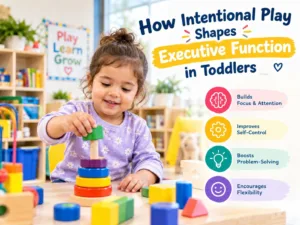
This includes fine motor skills—the hand strength needed for writing—developed through clay modeling and bead threading. It includes “executive function”—the ability to follow multi-step instructions—developed through group games and daily routines. When you choose a facility with a professional edge, you are investing in a curriculum that has been vetted and delivered by people who treat early childhood education as a career, not just a job.
The Importance of “Educare” in 2026
The modern approach to childcare is often called “Educare,” a term that blends “Education” and “Care.” It acknowledges that you cannot educate a child who does not feel cared for, and you cannot truly care for a child without stimulating their mind.
Staff in a licensed facility are experts in this balance. They provide the warm, nurturing hugs and physical comfort a toddler needs while simultaneously introducing complex concepts like gravity (through block play) or social justice (through inclusive storytelling). This dual-focus approach ensures that the child develops as a “whole person”—physically, emotionally, and cognitively.
Why Location and Community Matter
For families in the Fraser Valley, the “near me” factor is often the starting point of their search. Searching for a registered daycare near me isn’t just about a short commute; it’s about finding a hub within your own community. A local facility understands the specific needs of Langley families, from the local school district’s expectations to the cultural diversity of our neighborhoods.
A community-based licensed centre often has deep roots, with staff who have been with the facility for years. This low turnover rate is vital for “continuity of care,” allowing children to build long-term, trusting relationships with their educators. This stability is one of the most significant factors in a child’s emotional well-being.
Navigating the Different Types of Care
Parents often feel overwhelmed by the terminology: registered daycares, licensed centres, and preschool programs. To simplify:
- Registered (but not licensed) daycares: These are typically small-scale and meet minimal requirements but do not have the same level of oversight as a licensed facility.
- Licensed Centres: These are regulated by the province, have higher staff requirements, and are subject to regular inspections.
- Licensed Home Care: These are based in a residence but still follow provincial licensing rules.
For most parents seeking the highest level of professional engagement and curriculum-based learning, the licensed centre remains the gold standard.
Supporting Parents Through Professional Partnership
A professional staff team does not just care for the child; they support the whole family. They act as a resource for parents who may be struggling with sleep training, picky eating, or behavioral shifts.
Because educators in a licensed facility see hundreds of children over their careers, they have a deep “well” of experience to draw from. They can provide reassurance that a certain behavior is “developmentally appropriate” or offer early intervention if they notice a child might need extra support in speech or motor development. This partnership transforms the parent-teacher relationship into a collaborative team dedicated to the child’s success.
FAQs Section
1. What are the specific qualifications of the staff in a licensed childcare facility?
In British Columbia, licensed facilities require a set ratio of staff to hold Early Childhood Education (ECE) or ECE Assistant certifications. Additionally, all staff must undergo criminal record checks and maintain valid first-aid training.
2. How does a licensed facility handle staff-to-child ratios?
Ratios are strictly mandated by the province based on the age of the children. For example, infant and toddler rooms require more staff per child than preschool rooms. Professional centres like KiddieKollege strictly adhere to these to ensure every child receives personalized attention.
3. I am looking for a registered daycare near me in Langley; how do I verify their license? You can check the provincial “Child Care Map” or contact Fraser Health directly. They maintain public records of all licensed facilities and their inspection histories.
4. What happens during a typical day at a professional licensed childcare facility?
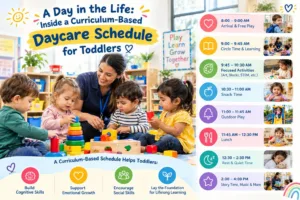
Days are structured but flexible, including blocks of time for outdoor play, sensory exploration, group circle time (for stories and songs), nutritious meals, and rest periods. Everything is designed to follow a predictable routine that makes children feel safe.
5. Are there subsidies available for families attending a licensed centre in Langley?
Yes. The BC Affordable Child Care Benefit is generally only available to families using a licensed childcare facility. Our team can help guide you through the application process to see if your family qualifies.
Final Thoughts: Investing in Your Child’s Future
The choice of childcare is one of the most impactful decisions you will make for your child’s early development. While the physical environment—the toys, the playground, the bright classrooms—is important, it is the staff who bring that environment to life. The professional edge provided by trained, certified, and accountable educators ensures that your child is not just being “watched,” but is being mentored and inspired.
As a trusted licensed childcare facility in Ave, Langley, Canada, KiddieKollege remains committed to providing an environment where the highest standards of professional care meet the warmth of a nurturing community. We invite you to visit us and see the professional edge in action, as we work together to build a bright, confident future for your little one.