Quick Summary
- Daily interaction in a quality day care setting introduces children to essential social routines, sharing, and collaborative play.
- Consistent peer engagement accelerates early language acquisition, emotional regulation, and conflict-resolution skills.
- Group activities and caring educators help toddlers and preschoolers build lasting self-esteem and independence.
- Structured routines, diverse play stations, and guided interactions build a smooth bridge to formal school environments.2
- Choosing a licensed, community-focused provider ensures your child receives balanced social, emotional, and physical support.
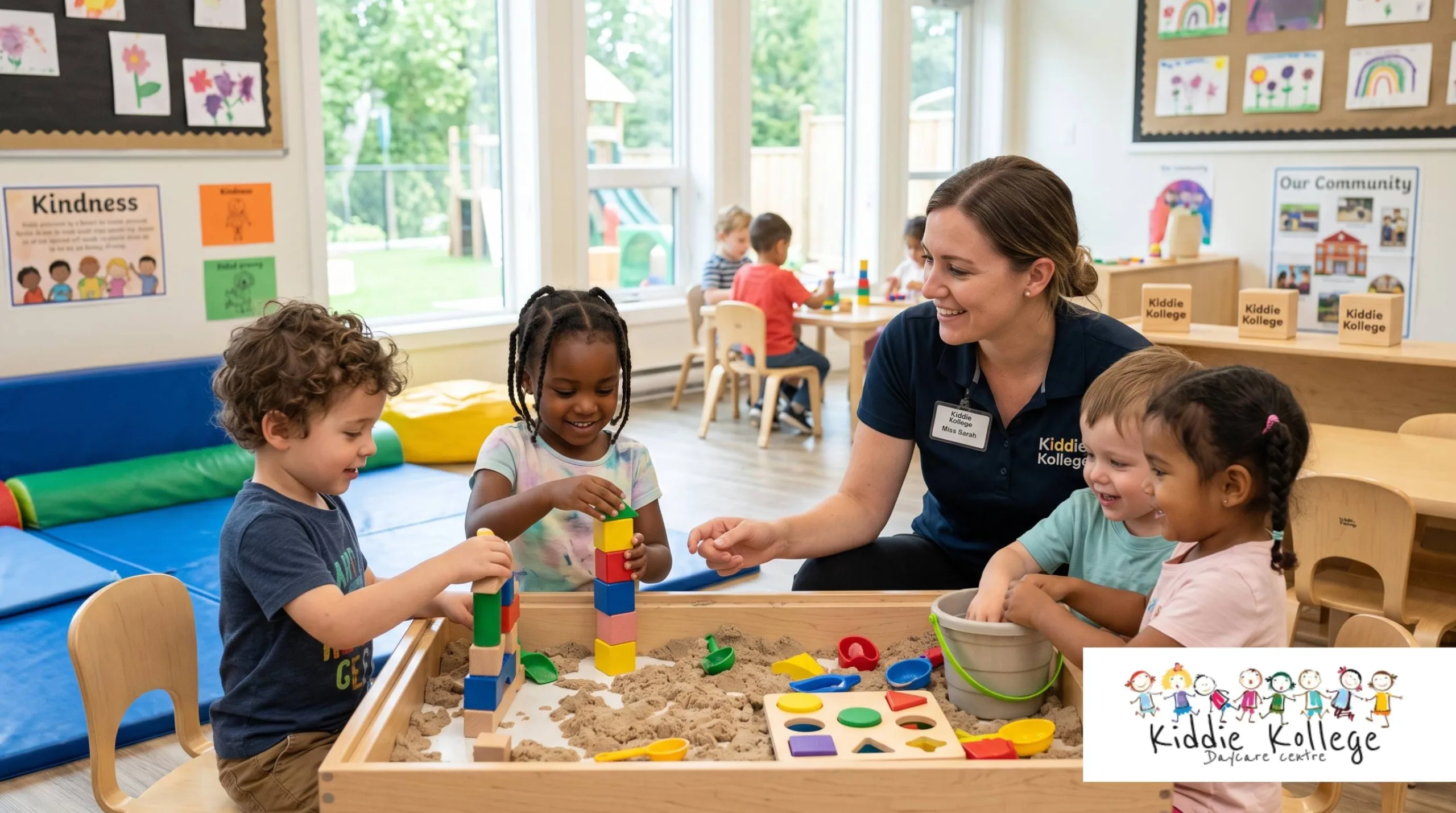
Watching your child take their first tentative steps toward another child in a sandbox is a quiet, powerful milestone. In these early years, social development unfolds rapidly through shared smiles, trade-offs over colourful building blocks, and learning how to navigate big feelings in small bodies. Enrolling your child in an intentional day care program offers far more than supervision while you work; it opens the door to a lively community where children learn who they are in relation to others.
At centres like KiddieKollege, located in Langley, educators build a secure and nurturing space where young learners practise social connection every day, transforming everyday playtime into lifelong personal confidence.
Want to learn more about our daycare programs? Click the WhatsApp button below for an instant chat :
The Architecture of Early Social Development
Human beings are wired for connection from birth, but the mechanics of getting along with peers do not appear automatically. They are practised, tested, and refined through daily interaction. In a dedicated early learning space, social milestones emerge through predictable, age-appropriate phases:
- Unoccupied and Solitary Play (Infancy to Early Toddlerhood): Children explore objects, textures, and movements on their own, observing others from a comfortable distance.
- Onlooker and Parallel Play (Ages 1 to 2.5): Children play alongside one another with similar toys without directly influencing each other’s actions, gaining comfort with peer proximity.
- Associative Play (Ages 3 to 4): Children begin sharing toys, commenting on each other’s creations, and engaging in loose, common activities without rigid rules.
- Cooperative Play (Ages 4 and Up): Children work together toward shared goals, negotiate roles in pretend games, and adhere to self-established guidelines.
When children move through these stages alongside consistent peer groups, their capacity for empathy and self-assurance flourishes naturally.
How Daily Peer Interaction Shapes Critical Life Skills
1. Mastering Communication and Active Listening
In a home environment, parents and family members quickly learn to interpret a child’s gestures, half-words, or pointing. While comforting, this intuitive understanding can sometimes reduce a child’s urgency to articulate complex thoughts.
In a group setting, clear communication becomes essential. If a child wants the blue crayon or wants to join a game of tag, they must find the words to express that desire. When children interact with peers, they also encounter different speaking styles, accents, and vocabularies. This rich linguistic environment prompts them to listen carefully, wait for responses, and adapt their tone to be understood.
2. Developing Emotional Regulation and Empathy
Learning that other people have independent thoughts, feelings, and boundaries is a major developmental leap known as theory of mind. In early group care, children experience this concept in real time:
- Seeing a peer cry after a tumble teaches spontaneous compassion, often prompting another child to offer a comfort toy.
- Taking turns with high-demand toys teaches delayed gratification and impulse control.
- Resolving minor misunderstandings under the gentle guidance of an educator demonstrates that disagreements do not break friendships.
Rather than shielding children from every emotional hiccup, a structured environment allows them to process frustration and excitement safely, creating resilient, emotionally balanced individuals.
3. Fostering Genuine Autonomy and Self-Confidence
True confidence does not come from constant adult praise; it comes from competence. When children successfully tidy up their play stations, put on their own outdoor boots, or invite a newcomer into their circle, they internalize a deep sense of capability. Group dynamics naturally encourage healthy autonomy because children mirror positive behaviours modelled by their peers, celebrating small victories together throughout the day.
Tailored Environments for Every Stage of Early Growth
Nurturing Infants in Safe, Sensory Spaces
For the youngest learners, social development begins with trust and predictable care. Enrolling in an infant day care setting ensures that babies experience rich sensory exploration alongside consistent eye contact, vocal imitation, and gentle physical holding. When infants feel fundamentally secure, their natural curiosity about other infants awakens, laying the groundwork for cooperative behaviours down the road.
Active Exploration in Toddler Programs
Toddlers are famous for their energetic exploration and burgeoning independence. Specialized toddler day care programs direct this lively energy into constructive social learning. At this age, children learn to navigate personal space, participate in circle-time songs, and explore tactile materials together. Skilled educators guide them through initial sharing moments, teaching practical language like “Can I have a turn when you are finished?” rather than enforcing artificial compliance.
The Power of Play-Based Philosophy
Formal lectures and rigid worksheets have little place in early childhood. Instead, a play-based day care model utilizes natural curiosity to drive learning. Through dramatic play corners, water tables, block towers, and outdoor sensory gardens, children solve complex problems organically. They negotiate rules (“You be the pilot, and I will be the doctor”), exchange roles, and discover that teamwork produces far more elaborate games than solo play.
Creating Safe, Supportive, and Healthy Foundations
A thriving social environment requires a steady framework of safety, health, and professional oversight.
Safety and Balanced Nutrition
Children cannot focus on creative collaboration if their physical needs are unmet or their surroundings feel chaotic. Maintaining high standards for day care safety and nutrition means providing clean, child-proofed facilities, clear safety protocols, and balanced, nutritious snacks that sustain steady energy levels. Predictable meal times also serve as pleasant social occasions where children sit together, share casual conversation, and practise table manners in a relaxed atmosphere.
The Value of Licensed Standards
Selecting a licensed day care centre gives families peace of mind. Licensing ensures that the facility complies with strict provincial staff-to-child ratios, staff qualification requirements, health regulations, and emergency preparedness. In British Columbia, these high standards create the transparent, supportive framework necessary for children to take healthy social and developmental steps with confidence.
Accessibility and Community Options
Every family deserves access to high-quality early learning. Exploring affordable day care options allows parents to balance household priorities while securing enriching care for their children. When families find sustainable care within their neighbourhood, they build long-term relationships with nearby educators and other local parents, strengthening the wider community support system.
Helping Your Child Make a Smooth Transition
Leaving familiar home routines to join a classroom community can feel intimidating for both parent and child. Applying proven transition to day care tips can make those first few weeks peaceful and reassuring:
- Visit the Facility Together: Allow your child to explore the play areas, meet the educators, and watch other children playing while you are right beside them.
- Establish a Consistent Morning Rhythm: Predictable routines at home reduce morning anxiety and help children know exactly what to expect next.
- Keep Goodbyes Loving and Brief: A warm hug, a cheerful phrase (“I will see you after afternoon snack!”), and a prompt departure signal to your child that you trust the educators and that they are in a safe place.
- Validate Their Emotions: Acknowledge feelings without amplifying anxiety. Saying “It is okay to miss home, and you are going to have fun building blocks today” provides comfort while encouraging resilience.
Preparing for Formal Schooling
As children grow older, the focus naturally expands to include school readiness. A comprehensive kindergarten readiness program bridges the gap between early play and primary education. By blending cooperative group tasks, foundational literacy, and self-help skills, children enter elementary school ready to follow multi-step instructions, sit comfortably in collaborative groups, and approach new academic challenges without fear.
Whether a parent is looking into reputable local providers like kiddy place childcare centre inc or comparing diverse preschools in langley bc, the priority remains the same: choosing a program that values emotional health alongside cognitive development. Centres such as kiddie club childcare center and other community pillars demonstrate that when children feel valued, their enthusiasm for learning becomes boundless.
Finding the Best Local Fit for Your Family
Selecting the right provider in your neighbourhood ensures that drop-offs and pick-ups remain practical while connecting your child with future schoolmates. When searching for a dedicated infant day care near me or touring a nearby pre school near me, consider the atmosphere:
- Are the educators actively listening to the children at eye level?
- Are the classrooms organized to encourage child-led exploration?
- Is there a secure, engaging outdoor play area?
If you are specifically exploring a play based preschool near me to support your child’s natural curiosity, visiting in person during active morning hours is the best way to see social learning in action. Quality langley childcare services recognize that every child brings a unique personality to the classroom, requiring a warm, individualized approach to flourish.
Frequently Asked Questions
1. At what age do children begin genuinely interacting with other kids?
Most children engage in parallel play (playing side-by-side without direct coordination) between 18 and 30 months. True cooperative play—where children share goals, assign roles, and work together—typically becomes noticeable around age three to four.
2. How do early childhood educators help shy children join group activities?
Experienced educators gently introduce shy children to group dynamics through low-pressure, one-on-one activities alongside a single peer or by assigning a special classroom helper role. Children are always invited to participate, never forced, allowing their comfort and trust to build at their own pace.
3. What coverage areas and neighbourhoods are served locally in Langley?
Local early learning centres generally welcome families across the City of Langley, the Township of Langley, Brookswood, Murrayville, and nearby Fraser Valley communities, providing accessible care along major commuter routes.
4. What is the typical local response time when inquiring about enrollment availability?
Most professional early education centres respond to phone calls, emails, or website inquiry forms within 24 to 48 business hours to discuss waitlists, program availability, and schedule in-person tours.
Final Thoughts: Building Confident Futures
The early years pass with remarkable speed, but the emotional and social foundations laid during this time last a lifetime. In a balanced day care setting, every shared story, cooperative art project, and outdoor adventure contributes directly to a child’s expanding sense of self-worth. By offering steady routines, caring guidance, and enriching peer interactions, educators empower children to step into the wider world with genuine curiosity and quiet self-assurance.
For families in the Fraser Valley seeking a safe, engaging, and supportive environment for their young ones, KiddieKollege at 20103 53 Ave, Langley, BC V3A 3T8, Canada offers dedicated programs designed to help every child thrive emotionally, socially, and intellectually.