
Summary
- Understanding the essential contributions of an early childhood assistant in a modern classroom.
- How professional support staff drive cognitive development and help children reach critical brain growth targets.
- The connection between structured classroom environments and the mastery of social milestones.
- Insights into how KiddieKollege utilizes expert staffing to maintain high-quality educational standards in Langley.
- A deep dive into the pedagogical theories, such as play-based learning, that define successful early years settings.
The early years of a child’s life are often described as a period of explosive growth, where the brain forms millions of neural connections every second. While parents and lead educators are often the most visible figures in this journey, the presence of a dedicated early childhood assistant is frequently the “secret ingredient” that allows a high-functioning classroom to thrive.
At KiddieKollege in Langley, we have observed firsthand how these professionals act as the glue within the educational environment, providing the individualized attention and emotional scaffolding necessary for toddlers and preschoolers to flourish. Their role is far from merely observational; they are active participants in the delicate process of shaping young minds, ensuring that safety, education, and nurturing care intersect perfectly throughout the day.
Want to learn more about our daycare programs? Click the WhatsApp button below for an instant chat :
The Science of Early Brain Development
To truly appreciate the work happening inside a Langley classroom, one must first understand the biological stakes. From birth to age five, children are in a constant state of “serve and return” interaction with the adults around them. When a child gestures, cries, or speaks, and an adult responds with eye contact, words, or a touch, neural connections are built and strengthened.
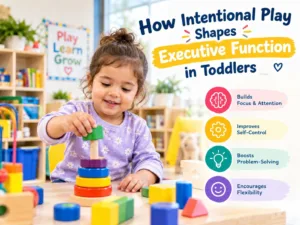
In a busy childcare setting, a lead teacher cannot always be everywhere at once. This is where the assistant professional becomes indispensable. By providing consistent, high-quality interactions, they ensure that no “serve” goes unreturned. This constant engagement is the literal fuel for brain growth, supporting everything from basic sensory perception to complex executive functions like problem-solving and memory.
Master of the Environment: Classroom Management
One of the most significant yet underrated contributions of support staff is their impact on classroom management. A classroom that feels chaotic is a classroom where learning is stifled. High cortisol levels—often triggered by loud, unpredictable, or disorganized environments—can actually inhibit a child’s ability to process new information.
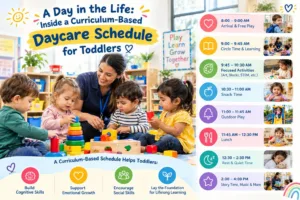
An assistant professional works behind the scenes to maintain a “flow.” They anticipate transitions, prepare materials before a child becomes frustrated, and manage the physical space so that it remains a “prepared environment.” By keeping the atmosphere calm and predictable, they allow children to move from a state of “survival mode” (high stress) to “learning mode” (curiosity and exploration). This structural support is what enables the lead educator to focus on delivering deep-dive lessons, while the assistant ensures the safety and emotional regulation of the group remain uncompromised.
Reaching Child Development Milestones
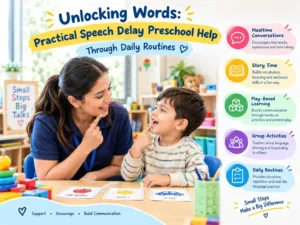
Development is not a race, but it does follow a predictable sequence. Tracking child development milestones is a collaborative effort. Because assistants often work closely with smaller groups or individuals during free-play periods, they are frequently the first to notice the subtle shifts in a child’s abilities.
Whether it is a toddler finally mastering the pincer grasp while working with sensory beads or a preschooler beginning to use complex sentences to describe their artwork, these professionals document these wins. This data is vital for parents and lead teachers to tailor the curriculum to the child’s specific needs. At KiddieKollege, we prioritize this level of observation to ensure that every child is supported exactly where they are in their growth journey.
The Heart of the Program: Play-Based Learning Curriculum
In the modern Canadian ECE landscape, we have moved away from “rote memorization” and toward a play-based learning curriculum. This philosophy recognizes that play is a child’s work. However, effective play-based learning is not “aimless” play; it is facilitated exploration.
Support staff play a critical role in “extending” the play. If a child is building a tower with blocks, an assistant might sit nearby and ask open-ended questions: “I wonder what would happen if we put the wider block at the bottom?” or “How many more green blocks do you think we need to reach the table’s edge?” This intentionality transforms a simple physical activity into a lesson on physics, math, and spatial awareness. By being present in the moment, the assistant helps the child bridge the gap between simple curiosity and a deep, conceptual understanding of the world.
Cultivating Social-Emotional Learning
Perhaps the most visible impact of an assistant is seen in the realm of social-emotional learning (SEL). In a world that is increasingly digital, the ability to navigate human emotions, resolve conflicts, and practice empathy is a “superpower.”
Inside the classroom, social milestones—such as sharing a coveted toy or waiting patiently for a turn—are often the hardest to master. When a conflict inevitably arises, the assistant is there to co-regulate. They don’t just “stop the fight”; they guide the children through the language of feelings. They might say, “I can see you are frustrated because you wanted to use the blue truck. Let’s ask Sarah when she will be finished.” This type of coaching builds the “emotional muscle” that children will use for the rest of their lives.
The Logistics of Local Excellence
For families searching for high-quality early childhood education near me, the criteria often center on the teacher-to-child ratio and the “vibe” of the classroom. A well-staffed centre in Langley is able to offer a much more personalized experience than one where a single teacher is overwhelmed.
Choosing a local provider that values its support staff means choosing a centre that understands the complexity of child development. It means that when your child has a “tough morning” and needs an extra five minutes of one-on-one cuddles to feel secure, there is a professional available to provide that without disrupting the learning of the rest of the class. This “human-centric” approach is what differentiates a standard daycare from a true development centre.
Why Support Staff Define Classroom Culture
The culture of a classroom is built on trust. Children need to feel that they are seen, heard, and valued. Because assistants often handle the “smaller” moments—tying a shoelace, helping with a snack, or sitting on the floor during a puzzle—they build a unique type of bond with the children.
This bond creates a safety net. When a child feels securely attached to the adults in their classroom, they are much more willing to take risks in their learning. They will try a harder puzzle, attempt a new word in a different language, or reach out to a new friend because they know they have a “secure base” to return to if they fail. This is the ultimate goal of any professional educational setting: to create a launchpad for the child’s potential.
Frequently Asked Questions
1. What is the difference between a lead teacher and an assistant?
The lead teacher generally handles the overarching curriculum planning and formal assessments, while the assistant focuses on the implementation of activities, individualized support, and maintaining the daily classroom flow. Both work as a cohesive team to ensure the “Educare” model is successful.
2. How does KiddieKollege ensure the quality of its support staff?
We prioritize hiring individuals who are not only qualified but also demonstrate a deep, natural empathy for children. Our team undergoes continuous professional development to stay current with BC’s Early Learning Framework and local health standards.
3. Is there high-quality early childhood education near me in the Willoughby area?
Yes! KiddieKollege serves the entire Langley region, including Willoughby, Walnut Grove, and Brookswood. Our central location makes it convenient for families across the community to access premier care.
4. How quickly can I get a response regarding enrollment or tours?
We value the time of busy Langley parents. Our administrative team typically responds to all inquiries, tour requests, and WhatsApp chats within one business day to ensure you have the information you need to make an informed choice.
5. How are social milestones tracked for my child?
We use a combination of daily observations and periodic developmental check-ins. Our staff documents how children interact with their peers, manage their emotions, and participate in group activities, providing you with a clear picture of their social growth.
Final Thoughts on Classroom Excellence
The role of the early childhood assistant is a vocation of heart and head. It requires a deep understanding of brain science and an even deeper well of patience and compassion. As we have explored, these professionals are essential to achieving the high standards of education and care that modern families expect. They are the observers of milestones, the facilitators of play, and the guardians of emotional safety.
At KiddieKollege, we are proud of the professional environment we have cultivated in Langley. We invite you to see our team in action and experience how our dedicated staff supports your child’s journey toward their big milestones through every small, intentional step. If you are looking for a partner in your child’s early years, we are here to help your family thrive.