Summary
- Early childhood is the critical window for developing self-reliance and decision-making skills.
- A professional daycare center provides a structured environment where children can safely practice independence.
- The transition from home-based care to a communal setting encourages toddlers to take ownership of their routines.
- Learn how specialized programs use “scaffolding” to help children master daily tasks like dressing, tidying, and problem-solving.
- Discover why social-emotional independence is just as important as physical self-sufficiency in a preschool setting.
There is a specific kind of magic that happens when a child realizes for the first time, “I can do it myself.” Whether it’s zipping up a jacket, pouring a cup of water without spilling, or resolving a minor toy dispute with a peer, these moments are the building blocks of a confident, self-reliant adult. As parents, our instinct is often to help, to speed things up, or to fix problems before our children even realize they exist. However, the true path to growth lies in giving them the space to try, fail, and eventually succeed on their own.
This is where the role of a professional daycare center becomes so vital. While the home is a place of absolute comfort and security, a dedicated learning environment offers a different kind of growth: a communal space designed specifically to foster autonomy. Choosing a high-quality daycare center in Ave, Langley, Canada, like KiddieKollege, means placing your child in an environment where independence is not just encouraged—it is baked into the daily curriculum. By stepping slightly outside the 1-on-1 protective bubble of home, children begin to discover their own capabilities in a safe, licensed, and supportive atmosphere.
Want to learn more about our daycare programs? Click the WhatsApp button below for an instant chat :
The Psychology of Autonomy in Early Childhood
Independence in the preschool years isn’t about being “on your own.” Rather, it’s about “agency”—the feeling that one’s actions have an effect on the world. Psychologists often point to the “sensitive period” for order and independence between the ages of two and five. During this time, children have an innate drive to master their environment. If we suppress this drive by doing everything for them, we unintentionally signal that they aren’t capable.
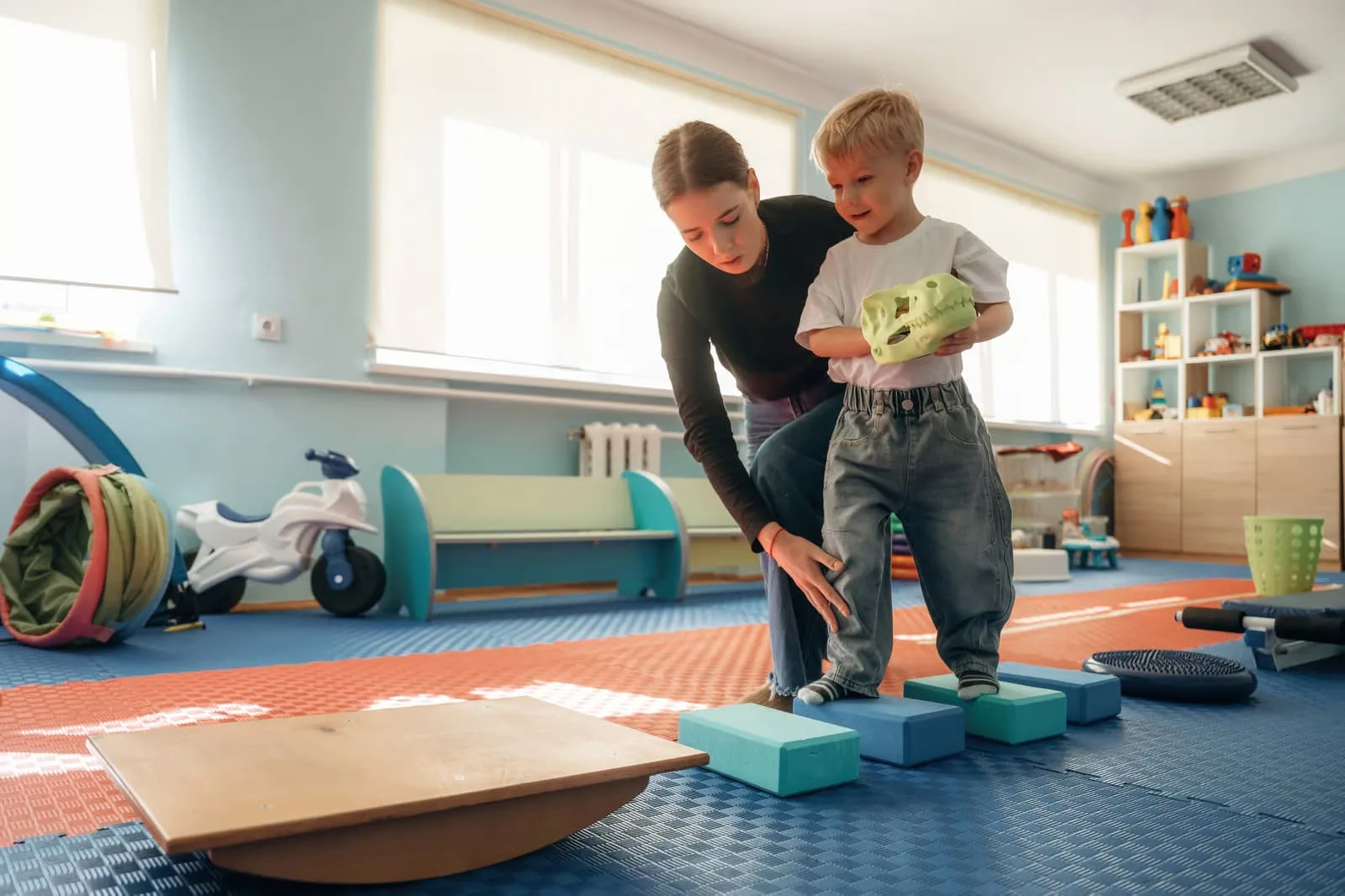
In a professional setting, educators use a technique called “scaffolding.” This means providing just enough support so the child can reach the next level of a task, and then slowly fading that support as the child gains mastery. It is a delicate balance that turns a standard universal day care centre into a true launchpad for personal growth.
Creating an Environment for “Yes”
The physical layout of a classroom is the first teacher of independence. In a home, many things are out of reach for safety or practical reasons—high counters, heavy doors, and “adult-only” tools. A professional learning environment reverses this.
Accessibility and Ownership
In a well-designed play learning center, everything is at the child’s level. Low shelves allow children to choose their own activities. Small hooks at their eye level mean they can hang up their own coats. Tiny pitchers and cups allow them to serve their own snacks. When a child can navigate their physical world without constantly asking for an adult’s help, their self-esteem skyrockets. They begin to see themselves as active participants in their day, rather than passive recipients of care.
The Power of Choice
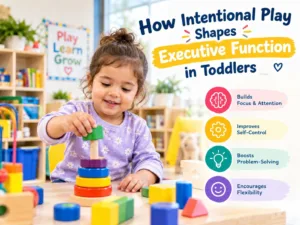
Independence begins with making choices. Throughout the day, children are given options: “Would you like to work with the blocks or the paints?” or “Should we read the story on the rug or at the table?” By making these small decisions, toddlers learn to identify their own interests and needs. This practice in decision-making is a foundational skill that will eventually translate into academic and social confidence.
Mastering Practical Life Skills
Many parents are surprised when they visit a kiddie kollege learning center and see their three-year-old clearing their own plate or putting on their own shoes—tasks that might lead to a struggle at the kitchen table at home. There are two reasons for this: the “peer effect” and the lack of an emotional power struggle.
The Peer Effect
In a group setting, children watch their peers. If a toddler sees their friend successfully putting on their “indoor shoes,” they are naturally motivated to try it too. Independence becomes “cool.” The classroom culture normalizes self-sufficiency, and children take great pride in showing their teachers and friends what they have mastered.
Routine as a Teacher
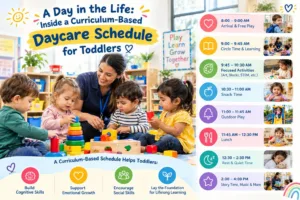
Routines provide a predictable framework that allows children to anticipate what comes next. When a child knows that after “outside play” comes “hand washing,” they start to move toward the sink before being told. This transition from being directed to being self-directed is a massive milestone. It reduces the need for constant adult intervention and allows the child to feel like a “big kid” who knows the ropes.
Social and Emotional Independence
Physical independence (dressing, eating, tidying) is easy to see, but social-emotional independence is where the most profound growth happens. This involves a child’s ability to manage their own emotions and navigate social interactions with minimal adult interference.
Problem-Solving and Conflict Resolution
In a private day care setting, minor conflicts over toys are inevitable. Instead of immediately jumping in to settle the dispute, a skilled educator will facilitate a conversation: “I see you both want the red truck. What can we do to solve this?” This guides the children toward negotiation and turn-taking. They learn that they have the social tools to fix their own problems, which is the ultimate form of independence.
Emotional Regulation
Independence also means being able to soothe oneself. Through the use of “quiet corners” or sensory activities, children learn to recognize when they are feeling overwhelmed and how to take a “break” to reset. Learning that they can manage their own big feelings—without needing a parent to stop everything—is essential for school readiness.
Navigating the Search for Quality Care
As parents begin their search for the right fit, they often weigh the pros and cons of different models. Some might prefer a larger, community-focused center, while others look specifically for a private day care near me that offers a more intimate, boutique-style environment.
Regardless of the size, the core requirement is topical authority—does the center understand child development? A center that prioritizes independence won’t have a “silent” classroom where children wait to be told what to do. Instead, it will be a hum of activity where children are moving, choosing, and doing. Finding this balance is key to selecting a program that respects the child’s innate drive for autonomy.
The Long-Term Benefits of Early Independence
Why does this matter so much? Because the habits formed in a daycare center stay with a child for life. Children who are encouraged to be independent in their early years tend to:
- Show Greater Resilience: They aren’t afraid to try new things because they’ve learned that “mistakes” are just part of the learning process.
- Have Higher Academic Engagement: They take ownership of their learning and are more likely to be self-motivated students.
- Develop Stronger Social Skills: They are better at navigating group dynamics and advocating for their own needs.
FAQs Section
Does encouraging independence mean the teachers aren’t helping the children?
Not at all. Encouraging independence means “helping them to do it themselves.” Teachers are constantly observing and providing “scaffolding.” For example, if a child is struggling with a zipper, the teacher might hold the bottom of the jacket steady so the child can pull the tab up. The goal is to provide the minimum amount of help necessary for the child to achieve the win.
My child is very clingy at home. Will they be able to be independent at a daycare center?
Surprisingly, yes! Many children act differently in a group setting than they do at home. Without the 1-on-1 dynamic with a parent, children often step up to the challenge of the classroom routine. Watching their peers be independent often provides the “social proof” they need to try things on their own.
What is the response time for inquiries at KiddieKollege in Langley?
We understand that choosing care is a time-sensitive and emotional process. For our Langley location, we aim to respond to all website inquiries and phone calls within one business day. We prioritize clear communication to help families make the best choice for their needs.
Which areas in Langley do you serve?
Our center at Ave, Langley, BC, is centrally located to serve families throughout Langley City and the Township of Langley, including the neighborhoods of Willoughby, Walnut Grove, Brookswood, and Murrayville. We also welcome families commuting through the area from nearby Surrey or Abbotsford.
Final Thoughts: A Partnership in Growth
Independence is not a destination; it is a journey that begins with a single step. By choosing a program that values the child’s voice and ability, you are giving them a gift that lasts far beyond their preschool years. It is about building the confidence that says, “I am capable, I am a problem-solver, and I can handle what comes my way.”
Professional centers play a vital role in this journey. By providing a safe, scaled-down version of the world, a high-quality daycare center allows children to test their limits and expand their horizons. At KiddieKollege, we are proud to be a trusted provider for families seeking a professional daycare center in Ave, Langley, Canada. We invite you to see how our structured, nurturing environment can help your child find their own “I can do it” moment.